The Desert Prophet Who Refused the Spotlight
Agnes Martin died in 2004, leaving behind a body of work that makes most contemporary painting debates look embarrassingly shallow. While the art world spent decades fawning over the theatrical maximalism of her male contemporaries, Martin was quietly perfecting something far more radical: getting rid of everything that wasn’t essential. Her grids weren’t minimalist the way people usually mean it. They were maximalist in chasing the infinite, each hand-drawn line a meditation on the space between what you plan and what actually happens.

Everyone talks about Martin’s retreat to New Mexico in 1967, like enlightenment only happens in properly scenic isolation. This completely misses the point. Martin’s breakthrough wasn’t about geography. It was philosophical. She’d spent years wrestling with Abstract Expressionism’s romantic individualism, making works she later called “trying to be smart.” The desert didn’t teach her to paint grids. It taught her to stop apologizing for them.
Think about what Martin actually pulled off technically. Each canvas started with gesso, applied and sanded multiple times until the surface felt almost otherworldly smooth. Then came the grids themselves, drawn freehand with pencil and ruler. Every line slightly imperfect in a way mechanical precision could never replicate. The tremor of human attention made visible. Critics who call these works “serene” haven’t spent enough time with them. They practically vibrate.
The Mythology of Simplicity
Martin’s notebooks show a mind constantly fighting with the whole idea of artistic expression. “The best things in life happen to you when you’re alone,” she wrote, but this wasn’t romantic tortured genius stuff. This was the practical solitude of someone trying to hear something incredibly quiet beneath all the noise of cultural expectations. Her process involved long periods of what she called “waiting,” sitting in her studio without painting, sometimes for months, until an image hit her with absolute clarity.
This waiting wasn’t passive. Martin was systematically tearing apart everything the New York art world had taught her about making work. She ditched color relationships, compositional drama, even the basic idea that painting should seduce viewers. Instead, she chased what she called “the untroubled mind,” a state that could translate directly into visual form without personality or style getting in the way.
The grid became her vehicle not because it was minimal, but because it was archetypal. Every human culture discovers the grid independently. It’s how consciousness organizes itself, how we sort experience into manageable chunks. Martin understood that by working with this most basic visual language, she could bypass the learned responses that keep us from seeing clearly. Her paintings don’t represent anything. They just are, in the most literal sense possible.
The Technology of Transcendence
What separates Martin from her minimalist contemporaries is how much chance mattered in her finished works. While Donald Judd engineered sculptures with industrial precision, Martin deliberately invited accidents. Her hand-drawn lines waver and skip, creating subtle variations no computer algorithm could replicate. These imperfections aren’t bugs in the system. They are the system, a visual record of consciousness bumping up against its own limits and finding beauty there.
The physical demands of Martin’s process bordered on monastic. Standing before a canvas for hours, drawing lines with precision that required complete mental focus, she was basically practicing moving meditation. The finished paintings are artifacts of this practice, not illustrations of it. They carry the temporal rhythm of their own creation, the way music carries the memory of performance even when recorded.
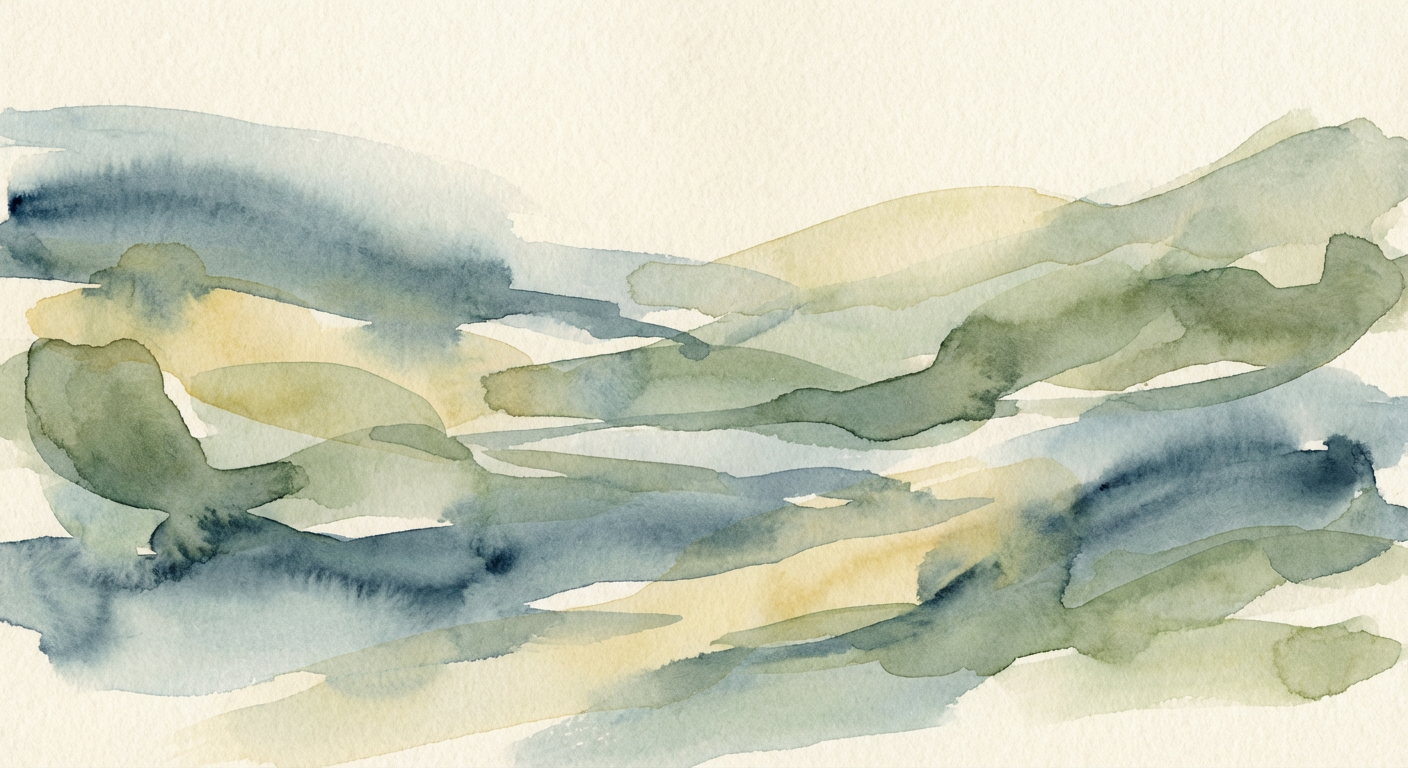
Martin’s color choices during her mature period reflect this same commitment to the essential. The pale blues, grays, and yellows that dominate her later work weren’t picked for aesthetic appeal but for psychological neutrality. These colors don’t compete for attention. They create a visual field where your mind can settle and notice subtler things: how light moves across a surface, the optical effects of repeated parallel lines, the weird sensation of looking at something that seems to look back.
The Radical Act of Repetition
By the 1970s, Martin had locked into a working method that stayed essentially unchanged for the rest of her career. Six-foot square canvases, pencil grids, muted colors applied in thin washes. Critics who accused her of repeating herself missed the point spectacularly. Martin wasn’t interested in variety for its own sake. She was investigating a single visual problem with the thoroughness of a scientist, making tiny adjustments and watching the results over decades of sustained attention.
This commitment to repetition was maybe her most radical gesture. In an art world addicted to novelty and career advancement, Martin chose depth over breadth. Each grid painting continued the previous work while being a completely fresh investigation. The differences between her 1975 and 1995 paintings are subtle but profound, like the difference between one morning and the next in a long meditation practice.
The money implications of this approach were huge. Martin could easily have diversified her output, made more commercially appealing work, or leveraged her growing reputation for bigger financial rewards. Instead, she chose a path that put clarity of investigation over market considerations. This wasn’t romantic anti-commercialism but practical wisdom. She understood her particular gift lay in sustained attention to a narrow range of visual possibilities.
The Afterlife of Influence
Martin’s influence on contemporary painting goes way beyond the obvious geometric abstractions that cite her work directly. She proved that painting could work as applied philosophy, a way of investigating consciousness through direct visual means. This opened possibilities artists are still exploring, from the meditative minimalism of Robert Ryman to the process-based investigations of contemporary painters like Peter Halley.
What stays most valuable about Martin’s example is her proof that radical innovation can come from patient refinement rather than dramatic gestures. She showed that an artist could spend a lifetime investigating a single visual idea without running out of possibilities. In an era when attention spans shrink and cultural cycles accelerate, this kind of sustained focus feels both impossible and necessary.
The grids keep vibrating on gallery walls around the world, their hand-drawn lines still carrying traces of Martin’s particular quality of attention. They offer viewers a chance to practice the same kind of patience that created them, to slow down enough to notice the difference between looking and seeing. For those willing to meet them halfway, they’re as radical now as they were fifty years ago.
What other artists have managed to find such vast territory within such apparent constraints? Which contemporary painters are carrying forward Martin’s investigation into the relationship between consciousness and visual form? The conversation she started is nowhere near finished.