The Broadway Strike That Wasn’t: How the 2025 Actors’ Equity Near-Walkout Exposed the Real Economics of Live Theater

September’s Cliff-Hanger Nobody Expected to Resolve

The theater district held its breath in September 2025 like a bad actor holding a monologue. For weeks, the possibility of a complete Broadway shutdown hung over the fall season opening, threatening to shutter all 41 theaters and send ripples through an entire cultural infrastructure built on the assumption that the show, somehow, always goes on. Then, in that last-minute fashion that has become almost formulaic for contract negotiations in live performance, the Actors’ Equity Association and the Broadway League announced they had reached an agreement. The metaphorical curtain stayed up. Productions opened on schedule. The crisis narrative evaporated almost as quickly as it had formed.

But here is what actually matters about that near-strike: it forced into the open a set of economic realities about Broadway that the theater industry prefers to keep backstage. This wasn’t theater people being cute about labor conditions. This was the moment when the fundamental contradictions in how we fund and value live theater became impossible to ignore. The near-walkout revealed that even after securing a 14% wage increase for minimum weekly salaries spread across three years, raising the Broadway minimum from $2,418 to approximately $2,757 per week by the contract’s final year, actors and stage workers are still operating in an economic ecosystem that doesn’t make sense.

The Paradox of a Booming Industry That’s Barely Surviving

The numbers initially tell a story of triumph. According to The Broadway League Industry Statistics, the 2024-2025 season generated $1.87 billion in total grosses. That’s money flowing into box offices, into production companies, into the theater district economy. It sounds robust. It sounds like an industry firing on all cylinders. And yet this same season saw 60% of productions fail to recoup their capitalization costs. Six out of ten shows lost money. This is not a rounding error. This is a structural catastrophe dressed up in fancy language about “risk in theater” and “the nature of artistic enterprise.”

Consider what this actually means for someone working in theater. A performer books a Broadway gig. It’s the thing every actor dreams about. The marquee, the eight performances a week, the paycheck that finally feels like professional validation. Then the show closes after three months because the production never found its audience, or because it opened during a particularly brutal stretch of the season. That performer keeps the salary they earned, sure, but now they’re looking at months of auditions and survival jobs before the next opportunity. The security that Broadway is supposed to offer disappears almost as quickly as the show itself.

Where Broadway Workers Actually Make Their Money

This is where the recent Princeton University study on arts labor becomes essential reading for anyone paying attention. The median annual income for members of Actors’ Equity Association across all performance contracts sits below $25,000. Below twenty-five thousand dollars. And here is the crucial detail: Broadway contracts represent less than 8% of all Equity work. That gleaming Broadway minimum of $2,757 per week is only part of a much larger and far messier economic picture. The real money for working actors comes from off-Broadway productions, regional theater, tour dates, and increasingly, the streaming work that nobody really wants to talk about because it complicates the narrative about theater being a live art form.

The near-strike pushed this reality to the surface because it forced negotiators on both sides to articulate what Broadway work actually means in the context of an artist’s entire career and annual income. Broadway is simultaneously prestigious and economically marginal. It’s the validation and it’s the exception. Most working actors make their living doing other kinds of theater, or doing theater sometimes and doing something else the rest of the time. The September agreement may have secured that 14% increase, but it did nothing to address the deeper economic instability that characterizes performance work at every level below the rarefied air of A-list casting.

The Celebrity Casting Problem Nobody Wants to Name

And this brings us to the question that the fall 2025 season has made unavoidable: what role does celebrity casting play in propping up a fundamentally unstable economic model? Productions starring major film actors are accounting for a disproportionate share of advance ticket sales in the 2025-2026 season. Anne Hathaway in “Smash: The Musical” is a box office phenomenon. It’s not just good casting or clever marketing. It’s financial necessity. The industry has learned that a known celebrity name can move the needle on presales in a way that even the most critically acclaimed production cannot. This creates a vicious cycle where the biggest budgets go to shows with movie stars, where those shows cannibalize the audience that might otherwise support mid-sized productions, where the ecosystem becomes increasingly split between celebrity vehicles and everything else.

This dynamic directly influenced what the Actors’ Equity negotiators were fighting for. The wages they secured matter most for ensemble members, understudies, the performers in that crucial supporting tier. But if more and more production budgets are being allocated to securing celebrity leads, then there are fewer mid-budget shows being mounted, which means fewer total Broadway jobs, which means the overall wage agreements matter less than they initially appear. It’s an elegant trap. The system can offer higher per-week minimums while simultaneously reducing the total number of employment opportunities.

What Actually Changed, and What Didn’t

The September agreement accomplished something real. Securing a 14% wage increase in any industry at any time is a genuine achievement. The stage workers and performers who will benefit from that increase deserve credit for their negotiating power and their willingness to threaten a shutdown. But the agreement also demonstrated how narrowly the negotiations were framed. The debate centered almost entirely on the Broadway minimum wage as though Broadway were an isolated economy rather than a subset of a much larger ecosystem in crisis.

Nobody walked away from the negotiations saying we need to fundamentally rethink how theater gets funded in America. Nobody suggested that perhaps the current capitalization model is broken if 60% of shows fail to recoup costs. Nobody articulated a vision for how Broadway could sustain more mid-budget productions instead of concentrating resources into celebrity vehicles. The near-strike was resolved, the theaters stayed open, and the industry returned to the status quo that was never sustainable in the first place. The show went on, which is what the show always does. Whether it can keep going on indefinitely under these conditions is a question the September agreement left completely untouched.

What’s your take on how Broadway should handle the tension between paying workers fairly and maintaining economic viability? Has the recent contract settled the issue for you, or do you see deeper problems still unfolding?

Venice 2026 Will Inherit a Beautiful Mess: How Pedrosa’s ‘Stranieri Ovunque’ Permanently Altered the Biennale’s DNA

The Year Everything Cracked Open

When Adriano Pedrosa stepped into the role of Venice Biennale curator in 2024, he didn’t just refresh the institutional wallpaper. He fundamentally rewired how the world’s most prestigious contemporary art exhibition thinks about representation, access, and the slippery concept of national identity. The edition he orchestrated under the banner “Stranieri Ovunque” (Foreigners Everywhere) was, in retrospect, less a single curatorial gesture and more a controlled demolition of gatekeeping logic that had calcified over 130 years. Now, as we approach the 61st iteration scheduled to open in April 2026, we’re living in the aftershock.

Pedrosa’s appointment itself was seismic: he became the first curator from Latin America to hold the position, a detail that matters far more than institutional press releases typically admit. The messenger shapes the message. Someone whose artistic formation occurred outside the Euro-American axis inevitably sees differently, asks different questions, extends invitations to different corners of the global art world. What unfolded in 2024 wasn’t experimental in the sense of being risky or trendy. It was radical because it was pragmatic.

The numbers tell part of the story. Of the 331 artists featured in that edition, 86 percent were exhibiting at Venice for the first time. Let that figure sit for a moment. In an institution where historical precedent and the weight of previous selections often determines future selections, where certain nations and regions have built up institutional muscle memory over decades, Pedrosa chose to flood the Biennale with unfamiliar names and geographies. This wasn’t tokenism masquerading as progressivism. This was a deliberate recalibration of whose voice gets amplified and to what audience.

When Australia Won, Everyone Else Began Asking Questions

The decision to award the Golden Lion for Best National Participation to Australia for artist Archie Moore’s “kith and kin” crystallized something that had been building beneath the surface. Moore’s work is deceptively simple in concept but ferocious in execution: hand-chalked names, 65,000 of them, mapping Aboriginal genealogy across 10,000 years of continuous culture. The work functions simultaneously as archive, memorial, and refusal. It refuses the Western curatorial impulse to frame Indigenous knowledge as artifact. It refuses to compress millennia into digestible narrative.

But here’s what made this award genuinely significant: it signaled that the Biennale was willing to honor a work about belonging and kinship that operates entirely outside the languages of Western conceptual legibility. Moore’s piece doesn’t perform for international critics. It speaks to community, to genealogy, to forms of knowledge transmission that predate the Biennale itself by orders of magnitude. Yet it won the top prize at arguably the world’s most prestigious contemporary art exhibition. This wasn’t a consolation prize for representation. This was a statement that artistic rigor and political urgency are not opposites.

The ripple effects were immediate and real. Major institutions began asking uncomfortable questions about their own blind spots. The Guggenheim and Tate Modern both published 2025 acquisition reports citing the Venice 2024 edition as directly influencing 18 new collection purchases of artists from the Global South. Eighteen works that might otherwise have remained in smaller galleries or in artists’ studios suddenly gained institutional legitimacy because one exhibition had made visible what was previously overlooked.

The Infrastructure Problem Nobody Wants to Acknowledge

Yet beneath this celebratory narrative sits an infrastructure crisis that Pedrosa’s curatorial brilliance cannot solve. A 2025 report by the European Cultural Foundation revealed what many already suspected: funding disparities for national pavilions remain grotesque. G7 nations average 2.1 million euros per pavilion while Sub-Saharan African nations average 180,000 euros. This isn’t a gap. It’s a chasm that curatorial goodwill cannot bridge.

What does this mean in practical terms? It means that a brilliantly selected artist from Lagos or Kinshasa arrives at Venice with a fraction of the resources available to their counterparts from London or Berlin. The curatorial vision expands, but the material conditions remain fundamentally unequal. You can be included in the conversation while remaining systematically disadvantaged within it. The Biennale can democratize representation without democratizing resources.

This tension will shape 2026 and beyond. The incoming curator inherits not just Pedrosa’s expanded roster of new voices but also the question his success has made impossible to ignore: Can you genuinely internationalize an exhibition while maintaining such radical material inequality? Is aesthetic inclusion sufficient without economic equity?

What Gets to Speak for Nations When Nations Aren’t Fixed Categories

The subtitle of the 2024 edition, “Foreigners Everywhere,” was doing subtle philosophical work. It suggested that in a globalized moment, the very concept of national representation has become unstable, contested, and often meaningless. Yet Venice’s architecture remains organized around national pavilions, a framework inherited from 1895 when nation-states felt like durable categories rather than contested abstractions. This structural contradiction hasn’t been resolved. It’s been made visible.

Pedrosa’s expansion of debut artists accomplished something important: it suggested that national pavilion representation might be less about who has the longest historical claim to a particular territory and more about who has something urgent to say right now. An artist’s practice might be geographically rooted but conceptually transnational. Their citizenship might matter less than their artistic genealogy, their collaborators, their intellectual lineage. These were the kinds of questions Pedrosa seemed to be asking through his curatorial selections.

As 2026 approaches, these questions become someone else’s inheritance and responsibility. The next curator will work within the structure Pedrosa helped reshape. They’ll have to decide whether to deepen this turn toward a more fluid understanding of national representation or pull back toward more traditional framings. Either way, there’s no returning to 1985 or even 2020. The Biennale has glimpsed a different future. The question is whether it has the institutional courage to pursue it.

The Residue That Remains

Legacy in the art world rarely feels clean. Pedrosa’s 2024 edition was not perfect. Some artists were undoubtedly overlooked. Some geographical regions remained underrepresented despite the massive expansion. The infrastructure problems remain intractable. Yet something genuinely shifted. When the Guggenheim and Tate began acquiring work by artists who had barely registered on international radar until their Venice appearance, they weren’t just responding to a moment. They were acknowledging that previous acquisition patterns had been far too narrow.

Visit La Biennale di Venezia Official Site to trace how these conversations are continuing, how the 2026 edition is being shaped by the precedents set in 2024. The real question hanging over Venice’s future isn’t whether the Biennale will maintain the expansive approach Pedrosa established. It’s whether the rest of the art world’s institutions will catch up. Whether collectors, curators, and critics will keep their gaze on the artists who arrived at Venice in 2024 for the first time, or whether attention will scatter toward the next institutional novelty.

What are you watching for in 2026? Which artists from the 2024 edition do you think deserve deeper institutional engagement? The Biennale’s legacy is still being written by those paying attention to what happens in the galleries after the opening ceremony.

Frida Kahlo’s Wardrobe Just Broke Records, And We’re Finally Understanding Why That Matters

When a Huipil Costs More Than a Pollock

Let’s talk about what happened in October at Sotheby’s New York, because this wasn’t just another auction. A single Tehuana huipil from Frida Kahlo’s personal collection sold for 1.1 million dollars. One embroidered garment. Not a painting, not a sculpture, but textile that was meant to be worn. This tells us something has genuinely shifted in how we value art, identity, and creative expression.

For decades, we’ve been taught a rigid hierarchy: paintings in museums are “real art,” while fashion gets shuffled into the applied arts category like some lesser cousin at Thanksgiving. Kahlo’s wardrobe auction upends that entirely. These pieces weren’t created for gallery walls. They were created for a body navigating pain, colonialism, identity, and refusal. The fact that they now command seven-figure valuations isn’t just a market fluctuation. It’s institutional recognition that wearable art deserves the same critical reverence we’ve always reserved for canvas.

The Casa Azul’s Vast Archive Is Finally Getting Its Due

Here’s where this gets even more interesting. The Museo Frida Kahlo Casa Azul holds over 6,000 objects, and until recently, most scholars and casual admirers had only glimpsed a fraction of what was actually there. In 2024, Mexico’s National Institute of Fine Arts launched a digitization project with 800,000 dollars in funding, finally cataloging Kahlo’s entire wardrobe collection. This matters because accessibility changes everything. When scholarship remains locked in archives, only credentialed researchers get to build the narrative. When inventories go digital, the conversation opens to curators, designers, artists, and curious people like you and me.

The digitization isn’t just about documentation. It’s about who gets to participate. Suddenly, a textile student in São Paulo can study the exact weave structure of a Kahlo garment. A contemporary designer in Lagos can examine embroidery patterns without flying to Mexico City. Museums are finally recognizing that hiding cultural artifacts behind velvet ropes isn’t preservation. It’s gatekeeping dressed up as protection.

Her Clothing Was Never Decoration. It Was Resistance.

This is where the conversation stops being about money and starts being about meaning. A 2025 study published in Fashion Theory by Dr. Circe Henestrosa established what many art historians have long suspected but lacked systematic evidence to prove: Kahlo deliberately weaponized her wardrobe as political and disability activism. Henestrosa examined fourteen photographic series spanning Kahlo’s life, each showing how she strategically deployed Tehuana dress, specifically chosen color palettes, and visible medical supports as a unified language of self-determination.

Think about this. Kahlo was born in 1907 Mexico, colonized territory. She was a disabled woman in a culture that preferred invisibility from both populations. She was bisexual and politically radical in eras when naming these things came with genuine danger. What did she do? She refused to shrink. She put on embroidered garments that screamed Mexicanidad when Mexican identity was deemed provincial and backward. She wore her medical corsets not as shameful necessities but as sculptural elements of her presentation. Every photograph becomes a manifesto. Every outfit is an argument. When we finally price her wardrobe at auction house valuations, we’re not just buying fabric. We’re validating a century of resistance that was dismissed as personal eccentricity.

Contemporary Designers Are Finally Paying Attention

The institutional world is catching up to what Kahlo understood intuitively. The Metropolitan Museum of Art’s current exhibition “Fashioning Identity,” running through 2026, dedicates an entire gallery to Kahlo’s influence on living designers. In its first eight weeks, the show drew 290,000 visitors. Not tourists passing through. People who came specifically to see this work. And then there’s Dries Van Noten, one of the most respected names in contemporary fashion, who in his final collection before retirement included seven direct references to Oaxacan embroidery patterns documented in Kahlo’s archived wardrobe.

Van Noten’s choice matters because he’s signaling something to the fashion world: this is legacy that demands engagement, not appropriation. He’s spent his career arguing that fashion is research, that every garment contains history, that designers have a responsibility to the cultures they reference. His final statement before stepping away essentially says Kahlo’s wardrobe is foundational. You cannot build anything honest in fashion without acknowledging where she stood and what she wore while standing there.

Visit the Metropolitan Museum Fashion Exhibitions page and look at the conversation happening there. People are writing about gender, disability, colonialism, and textiles in the same breath. That convergence wouldn’t exist without this moment of valuation and visibility.

What This Means for How We See Wearable Art Now

So here’s my pitch to you: if you’ve ever dismissed fashion history as frivolous, or relegated costume studies to a tier below “serious art,” this is your invitation to reconsider. Kahlo’s 1.1 million dollar huipil isn’t just an expensive artifact. It’s proof that the clothes we wear, the way we present ourselves, the textiles we choose are not supplementary to art. They are art. They are activism. They are autobiography written directly onto the body.

The auction house prices, the museum exhibitions, the design collections, the digitized archives, none of these are trends that will fade. They represent a structural shift in how institutions are learning to value what women, disabled people, and colonized cultures have always known: that beauty, resistance, and identity exist in the same space, and that wearable art deserves the same critical attention we’ve always given to painting and sculpture.

If you want to see what this conversation looks like in action, start by exploring the Casa Azul collection online. Read the Fashion Theory article. Spend time in those Met galleries. Then come back and tell me what you see. What strikes you? What does it mean that Kahlo’s most intimate creative choices are now being analyzed at the highest levels of academic and commercial art worlds? The conversation is open now in a way it wasn’t a year ago. The question is whether you want in.

Stranieri Ovunque and the Reshaping of the Gallery Canon: What Happens When One Biennale Rewires the System

Stranieri Ovunque and the Reshaping of the Gallery Canon: What Happens When One Biennale Rewires the System

The Moment Everything Shifted

There’s a particular kind of seismic activity that occurs in the art world when a single curatorial decision cracks open what everyone had assumed was settled. Adriano Pedrosa’s 2024 Venice Biennale did exactly that. By programming the Central Pavilion with an entirely Global South-focused exhibition for the first time in the event’s 129-year history and bringing together 331 artists, a record high, Pedrosa didn’t just curate a Biennale. He fundamentally altered the conversation about whose work deserves institutional legitimacy and, more crucially, how that legitimacy gets distributed through the system.

Stranieri Ovunque and the Reshaping of the Gallery Canon: What Happens When One Biennale Rewires the System

The theme, “Stranieri Ovunque” (Foreigners Everywhere), arrived not as a provocative slogan but as a structural intervention. Over seven months, 700,000 visitors moved through galleries that had been reorganized around a premise most major institutions had quietly avoided: that the center of contemporary art could actually shift. Not symbolically. Materially. Physically.

The Cascading Effect on Institutional Programming

What fascinates me most isn’t what happened during those seven months in Venice, but what’s happened since. Eighteen months later, gallery directors still cite the Biennale as their primary curatorial compass. According to Artforum’s recent year-end survey of gallery programming decisions, the “Stranieri Ovunque” effect emerged as the single biggest influence on how institutions structured their group exhibitions throughout 2025. Let that settle for a moment. Not a specific artist. Not a particular aesthetic movement. The philosophical and structural decision to decenter the Western perspective became the organizing principle for institutions that, two years prior, would have treated such programming as inherently risky.

The mechanics of this influence show up in the details. Galleries that had routinely paired one “international” artist alongside five European or American practitioners suddenly began reconsidering the mathematics of representation. More importantly, they began reconsidering why they’d ever accepted those proportions as natural. Small project spaces in Brooklyn and Berlin started commissioning research into overlooked practitioners from Lagos, São Paulo, and Jakarta. Mid-tier galleries opened new regional departments. Larger institutions quietly reallocated acquisition budgets. The Biennale had functioned like a permission structure, but it was permission of a specific kind: not permission to experiment, but permission to acknowledge what had always been true about global artistic production and finally act accordingly.

The Market Responds with Numbers

Markets react to signals, and the signal was unmistakable. According to the Art Basel & UBS Art Market Report 2025, acquisitions of Latin American and African contemporary art at major U.S. auction houses increased 28 percent in the twelve months through mid-2025. That’s not a marginal uptick. That’s institutional capital recognizing an opportunity and following the trail that Venice had marked.

But here’s where the narrative gets complicated, and where I think the real curatorial sophistication emerges. This wasn’t simply market capture by Western institutions belatedly recognizing value. What I observed across multiple cities was something messier and more interesting: genuine recalibration happening unevenly, with both sincere commitment and opportunism sitting side by side. Some galleries were making long-term acquisitions and hiring specialists. Others were clearly practicing what I’ll call “Biennale tourism,” programming one Global South-focused show to check a box before returning to familiar patterns. The effect was real regardless of intention. The conversations shifted anyway. Once you’ve hung a Lagos-based artist’s work in the central gallery position rather than the side room, you can’t fully retreat to previous arguments about visibility and access.

The Complications Emerging Around the 2026 Edition

Now comes the pressure test. The 2026 Venice Biennale, scheduled for April through November, has already sparked substantive debate regarding its curatorial framework, and I find myself genuinely uncertain about how to read these developments. The organizers announced a lineup that includes three artists who also exhibited in Pedrosa’s 2024 edition. Critics have pointed to this decision as a troubling signal, an argument that the geographic diversity goals central to “Stranieri Ovunque” may be eroding before the next edition even opens.

What interests me about this criticism isn’t whether it’s correct, but what it reveals about expectations. The Venice Biennale has historically operated as a machine for recycling established names and validating pre-existing markets. That Pedrosa disrupted this was extraordinary. That the incoming curatorial team faces immediate pressure to perform an even more radical version of that disruption suggests something important: we’re not dealing with a stable new consensus but rather a volatile moment where the old assumptions have cracked but haven’t yet been replaced with stable alternatives. The inclusion of returning artists could indicate continuity-seeking, or it could indicate something more thoughtful, a recognition that some artists from the Global South had finally achieved the recognition they deserved and deserve ongoing institutional attention.

The conversation around this on social media and in closed-door gallery director meetings has been genuinely heated, which pleases me. When programming decisions generate actual stakes and actual disagreement, it means the work of decentering hasn’t been absorbed into purely aesthetic preference. It remains contested terrain.

What This Actually Changes on the Ground

Beyond the statistics and the market reports, the most significant change is structural rather than visual. Visit La Biennale di Venezia Official Site and you’ll find documentation of something that fundamentally altered how curators now speak about the work of selection. The Biennale demonstrated that you could build a world-class exhibition around premises explicitly different from those that had organized such events for over a century.

In smaller ways, this has rippled through how galleries approach artist talks, how they structure publication design, how they narrate the work in promotional materials. The language of curatorial framing has shifted. Less talk of “discovering” or “bringing to an international audience.” More precision about historical erasure and institutional gatekeeping. Some of this is performative, certainly, but performance has real consequences. Repeat a different story enough times and it becomes available for people to actually believe.

The Unfinished Question

What remains genuinely open is whether we’re witnessing a permanent shift or an extended moment that will eventually contract back toward familiar patterns. The numbers suggest something durable is happening. The programming decisions suggest institutional commitment is more than rhetorical. Yet I’ve watched enough cycles of art world enthusiasm to recognize that sustained change requires continuous pressure, not coasting on past disruption.

The real test will emerge over the next two years as we move closer to 2026 and begin to see whether this becomes embedded practice or settles into occasional programming gesture. That’s what I’m watching for. Not the Biennale itself, that’s already written, but whether its most radical premises have enough momentum to reshape what happens in the thousands of smaller curatorial decisions happening right now in galleries across every major city. That’s where the actual work of change lives.

The Louvre’s Breakup With Itself: What Happens When the World’s Most Visited Museum Admits Its Masterpiece Is Drowning in Tourists

The Louvre’s Breakup With Itself: What Happens When the World’s Most Visited Museum Admits Its Masterpiece Is Drowning in Tourists

The Dignity Crisis Nobody Wanted to Name Out Loud

Picture this: you’ve saved for two years. You’ve finally made it to Paris. You’re standing in line at 7 AM outside the Louvre, your feet already aching, your camera already out. By the time you reach the Denon Wing, you’re packed into a human sardine tin with approximately 8,000 other people, all of you shuffling through a narrow corridor toward Leonardo da Vinci’s Mona Lisa like pilgrims at a holy site. You get maybe ninety seconds of actual sightline before the crowd propels you forward. You take your iPhone photo. You leave feeling weirdly hollowed out. This has been the Louvre experience for roughly two decades now, and it took Emmanuel Macron himself to finally say what everyone’s been thinking: this is undignified.

The Louvre's Breakup With Itself: What Happens When the World's Most Visited Museum Admits Its Masterpiece Is Drowning in Tourists
The Louvre’s Breakup With Itself: What Happens When the World’s Most Visited Museum Admits Its Masterpiece Is Drowning in Tourists

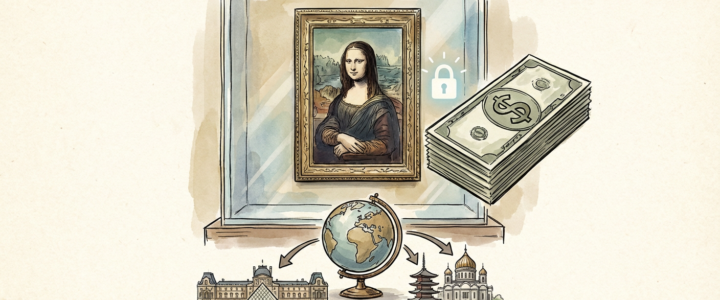
The 2025 announcement that the Louvre would relocate da Vinci’s most famous work to a separate venue is genuinely seismic in the museum world. This isn’t just administrative shuffling. This is an institution essentially admitting that its own success has become its own failure. The Grand Palais, Paris’s gloriously renovated Olympics venue, is being positioned as part of the solution. If you’re paying attention to what’s actually happening here, you should be deeply interested in what it means for how we experience art in the 21st century.

The Numbers That Nobody Can Ignore Anymore

Let’s start with the obvious math. The Louvre welcomed 8.9 million visitors in 2024 alone. That’s not a typo. Eight point nine million people. For twenty-nine consecutive years, it has held the title of the most visited art museum on the planet. That achievement, which museum directors traditionally frame as a point of pride, has quietly become a crisis of logistics and human experience. When you’re funneling nearly 9 million people annually through a building designed for a fraction of that traffic, something has to give. The Mona Lisa, insured at approximately $870 million and handled with the security protocols of a nuclear weapon, has become less a painting and more a checkpoint in an obstacle course.

What’s particularly maddening is that it didn’t have to reach this point. The Mona Lisa hasn’t traveled since 1974, when it made that legendary journey to Tokyo and Moscow. Fifty years pinned to one wall like a butterfly in a display case. The painting itself has become a hostage to its own fame. The Louvre’s institutional paralysis around that reality speaks volumes about how museums have structured their entire business models around a single object. It’s bad architecture. It’s bad curation. It’s bad for the art.

Why the Grand Palais Suddenly Matters

The Grand Palais reopened in September 2024 after a €466 million renovation that basically rebuilt the entire venue from the inside out. It hosted the Paris Olympics and proved itself as a functioning cultural space, but what’s more interesting is what it represents strategically. Paris, for the first time in recent memory, is actively trying to distribute its cultural weight across more than one institution. That’s revolutionary thinking in a city that has historically treated the Louvre as the gravitational center of all art tourism.

The proposed move isn’t about diminishing the Mona Lisa. It’s about resetting the entire equation. By giving da Vinci’s masterpiece its own dedicated space at the Grand Palais, the Louvre achieves something counterintuitive: it actually increases access while reducing the crushing weight of one object. Meanwhile, the Louvre itself could theoretically become what it was always supposed to be, a museum where you can actually stand in front of a Caravaggio without feeling like you’re in a human traffic jam. This is museum thinking for adults, not the theme-park model that’s dominated for too long.

The Broader Industry Shift Nobody’s Talking About Enough

Here’s what keeps me awake at night about this whole situation: the Louvre isn’t an anomaly. According to recent research from the Association of Art Museum Directors Reports, 78% of major institutions worldwide are now actively investing in what they call “decompression strategies” for high-traffic works. Museums across Europe, North America, and Asia are grappling with the exact same problem. The Metropolitan Museum. The British Museum. The Uffizi. They’re all drowning in visitors, all trying to figure out how to protect the integrity of the viewing experience while keeping doors open to as many people as possible.

The difference is that the Louvre is finally admitting the problem out loud. That matters. When you visit the Louvre Museum Official Site, you’ll find the documentation of this decision. It’s not hidden. It’s not framed as a failure. It’s being positioned as a necessary evolution. That kind of institutional honesty is rare in the art world, where the default move is usually to pretend everything is fine while the institution slowly collapses under its own weight.

What This Actually Means for How You’ll Experience Art

If you’ve ever felt that hollow sting of standing in front of one of the world’s greatest paintings while pressed against strangers, all of you fighting for a glimpse, then you understand why this moment matters. The Louvre’s restructuring isn’t just about moving a painting. It’s about reclaiming the idea that museums are supposed to be spaces where you can actually have an encounter with art, not just collect evidence that you were there.

The catch is that implementation will be everything. If the Grand Palais opening becomes another tourist bottleneck, if security measures turn the Mona Lisa’s new home into some sort of sterile vault experience, then this whole exercise fails. But if it’s done thoughtfully, with actual consideration for how people move through space and process beauty, then we’re looking at a model that could reshape museum practice globally. The Louvre has been the world’s most visited museum for nearly three decades. The real question now is whether it can become the world’s most thoughtful one. That’s the debate worth having.