Why Gallery Politics Matter More Than You Think (And How to Navigate Them Like a Pro)

Why Gallery Politics Matter More Than You Think (And How to Navigate Them Like a Pro)

The Hidden Power Structures Shaping What You See

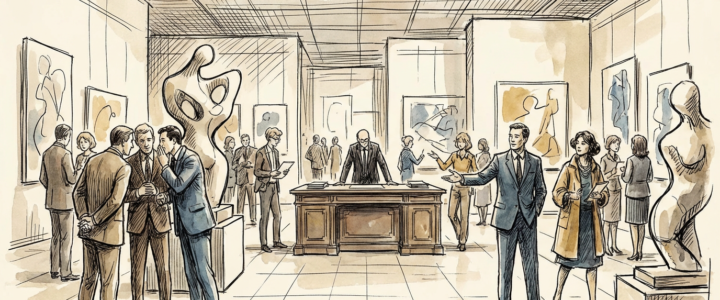
Walk into any contemporary art gallery and you’re not just entering a neutral white cube. You’re stepping into a carefully orchestrated battlefield where money, taste, and cultural influence collide in ways that would make Machiavelli dizzy. The pristine walls and hushed tones mask a complex ecosystem of dealers, collectors, critics, and artists all vying for position in a hierarchy that determines which voices get amplified and which fade into obscurity.

Why Gallery Politics Matter More Than You Think (And How to Navigate Them Like a Pro)

Consider the recent controversy surrounding Hauser & Wirth’s expansion strategy. When mega-galleries like this one plant flags in new cities, they’re not just opening retail spaces. They’re establishing cultural beachheads that can reshape entire local art scenes. Small galleries that once championed emerging local talent suddenly find themselves competing with institutions backed by hundreds of millions in collector relationships. It’s David versus Goliath, except Goliath has a marketing budget larger than most museums’ annual operating costs.

This isn’t abstract theory playing out in ivory towers. These power dynamics directly impact what art gets made, shown, and preserved for future generations. When a handful of galleries control access to the most influential collectors and museums, they essentially become cultural gatekeepers. Understanding this system isn’t just insider baseball for art world wonks. It’s basic literacy for anyone who cares about how culture gets created and distributed.
Illustration for Why Gallery Politics Matter More Than You Think (And How to Navigate Them Like a Pro)

The Collector-Dealer Industrial Complex

The relationship between top-tier dealers and their collector base operates like a sophisticated matchmaking service crossed with a hedge fund. Dealers don’t just sell art; they create entire cultural narratives around their stable of artists. Take David Zwirner’s handling of the Kerry James Marshall market. By strategically placing works with the right institutional and private collectors, Zwirner didn’t just increase Marshall’s prices. He positioned Marshall as an essential voice in contemporary painting, making his work feel both historically significant and investment-grade.

This symbiotic relationship creates what economists call “manufactured scarcity.” Galleries maintain waiting lists for hot artists, doling out works to collectors who have demonstrated loyalty and purchasing power across multiple artists in the gallery’s stable. It’s a system that rewards the already wealthy while creating artificial barriers for newer collectors or institutions with smaller budgets. The Metropolitan Museum might have to wait in line behind a hedge fund manager for the next Kaws sculpture.

But here’s where it gets interesting: some dealers are actively working to disrupt their own industry. Gavin Brown’s decision to leave his Chelsea mega-space for a more modest operation in Harlem wasn’t just about rent costs. It was a philosophical statement about gallery culture’s increasing detachment from artistic risk-taking. Brown recognized that the pressure to maintain ever-larger spaces and staff forces dealers into conservative programming choices that prioritize marketability over innovation.

The Museum-Gallery Revolving Door

The boundaries between commercial galleries and nonprofit museums have become increasingly blurred, creating ethical complexities that would have scandalized previous generations of curators. Museum directors regularly sit on gallery boards. Curators leave institutions to become private advisors. Gallery owners donate works to museums where their friends are trustees. These relationships aren’t necessarily corrupt, but they create an echo chamber where the same aesthetic and cultural values get reinforced across supposedly independent institutions.

Look at Klaus Biesenbach’s trajectory from MoMA PS1 to the Museum of Contemporary Art Los Angeles. His programming choices at both institutions reflected relationships built during his earlier commercial gallery work in Berlin. When Biesenbach champions certain artists or movements, he’s not operating in a vacuum. He’s drawing on a network of relationships that span decades and continents, all connected through the art market’s circulatory system.

This interconnectedness can produce genuinely exciting results when it works well. The collaboration between Tate Modern and various commercial galleries on large-scale installations has created some of the most memorable museum experiences of the past decade. But it also raises questions about whose interests are really being served when a museum’s exhibition program starts looking suspiciously similar to blue-chip gallery rosters.

Regional Scenes and Geographic Hierarchies

The art world’s obsession with certain geographic centers creates a self-perpetuating cycle that marginalizes entire regions of cultural production. New York, London, and Hong Kong function as the holy trinity of the contemporary art market, with Los Angeles and Berlin as important secondary markets. Everyone else fights for scraps of attention from the international circuit.

But this hierarchy is more fragile than it appears. The pandemic forced galleries to experiment with digital viewing rooms and virtual programming, accidentally democratizing access in ways that threaten traditional geographic advantages. A collector in São Paulo could suddenly participate in preview events that were previously limited to Manhattan insiders. Some galleries discovered that their online programming reached more engaged audiences than their physical openings ever had.

Cities like Detroit, New Orleans, and Phoenix have used this disruption to their advantage, developing distinct artistic identities that don’t depend on validation from coastal tastemakers. The Contemporary Arts Museum Houston’s recent focus on Gulf Coast artists isn’t just regional boosterism. It’s a strategic recognition that authentic cultural production happens everywhere, not just in rent-controlled studios in Bushwick.

How to Engage Without Getting Played

Understanding gallery politics doesn’t mean becoming cynical about the entire enterprise. Some of the most transformative art of the past century has emerged from this flawed system, often by artists and dealers who figured out how to game it for genuinely progressive purposes. The key is developing enough literacy to distinguish between genuine innovation and sophisticated marketing.

Start by following the money, but don’t stop there. When a gallery announces a new artist representation, research the artist’s exhibition history, institutional relationships, and critical reception over time. Has this artist been developing a consistent practice, or does their sudden prominence coincide suspiciously with market trends? Are museums acquiring their work, or just collectors? These patterns reveal more about artistic significance than any press release.

Pay attention to galleries that take risks on unconventional programming or support artists through lean periods rather than just during hot streaks. Spaces like Miguel Abreu Gallery in New York or Koppe Astner in Glasgow have built reputations by maintaining consistent artistic vision regardless of market pressures. Their programming choices offer a counterpoint to the algorithmic predictability of art fair booths.

The art world’s political machinations can feel intimidating, but they’re also endlessly fascinating once you start recognizing the patterns. Every opening becomes a chance to decode power relationships, spot emerging trends, and witness the real-time creation of cultural value. Jump in, ask questions, and remember that the most interesting conversations happen when someone challenges the room’s assumptions.


When Boundaries Dissolve: The Radical Legacy of Cross-Medium Collaboration in Contemporary Art

When Boundaries Dissolve: The Radical Legacy of Cross-Medium Collaboration in Contemporary Art

The False Promise of Purity

The mythology of artistic purity has always been a convenient fiction, yet one that sticks around in critical discourse with surprising stubbornness. We talk about “pure” painting, “pure” music, “pure” cinema as if these mediums existed in sealed bubbles, untouched by the messy realities of influence and cross-pollination. This thinking doesn’t show sophistication—it shows a fundamental misunderstanding of how revolutionary art actually emerges.

When Boundaries Dissolve: The Radical Legacy of Cross-Medium Collaboration in Contemporary Art

Think about the scandal when John Cage’s “4’33″” premiered in 1952. Critics dismissed it as a gimmick, completely missing how Cage’s collaboration with visual artist Robert Rauschenberg had fundamentally altered his conception of sound and silence. Rauschenberg’s “White Paintings” weren’t just visual art—they were temporal experiences that revealed the impossibility of true emptiness. When Cage sat before that piano, he wasn’t performing music in any traditional sense. He was manifesting a philosophical investigation born from visual art practice, creating what would become one of the most influential pieces of the 20th century precisely because it refused to respect medium boundaries.

The resistance to cross-medium work often masks a deeper anxiety about the democratization of artistic authority. When David Bowie collaborated with William Burroughs, or when Laurie Anderson merged performance art with electronic music, they weren’t diluting their respective practices. They were exposing the artificial constraints that had calcified around artistic disciplines, revealing new possibilities that neither medium could have achieved in isolation.

Illustration for When Boundaries Dissolve: The Radical Legacy of Cross-Medium Collaboration in Contemporary Art

The Choreography of Collaboration

True cross-medium collaboration works less like a meeting of equals and more like a complex dance where each partner must simultaneously lead and follow. The most successful examples understand this paradox, creating works that couldn’t exist without the specific friction generated by different artistic languages attempting to merge.

Meredith Monk’s operatic performances exemplify this principle. Her collaborations with filmmakers, dancers, and visual artists don’t simply add multimedia elements to vocal compositions. Instead, they create entirely new categories of experience. When Monk worked with Ping Chong on “Quarry” in 1976, the resulting piece demanded new critical vocabulary because it existed in the spaces between established categories. The work’s power came not from its components but from their collision.

When Apichatpong Weerasethakul collaborates with installation artists like Susan Philipsz, the resulting projects reveal how cinema’s temporal logic can be liberated from narrative constraints. These aren’t films with art installations attached—they’re hybrid forms that question the assumptions underlying both mediums. The critic who approaches such work with traditional film analysis tools will miss its revolutionary potential entirely.

The key lies in understanding that successful cross-medium collaboration requires each artist to risk their expertise. It’s not about bringing fully formed ideas from one domain to another, but about allowing the collision to generate forms that neither collaborator could have imagined independently.

Technology as Translator

Digital technology has fundamentally altered cross-medium collaboration, though not always in ways that critics have adequately acknowledged. The tendency to treat digital tools as merely new instruments for existing practices misses their more radical potential as generators of entirely new artistic languages.

When Rafael Lozano-Hemmer creates installations that respond to heartbeats or breath patterns, he’s not simply adding technological novelty to conceptual art. His collaborations with programmers, biologists, and architects create feedback loops that make the audience’s physiological responses part of the work’s compositional structure. The technology doesn’t serve the art—it becomes co-author, introducing elements of chance and response that no single human collaborator could provide.

The work of teamLab demonstrates how digital collaboration can dissolve the boundaries between disciplines so completely that traditional critical categories become inadequate. Their environments merge painting, sculpture, architecture, music, and performance into unified experiences that exist only in their technological implementation. Critics who try to parse these works into component parts miss their essential achievement: the creation of art that exists as pure collaboration between human creativity and computational possibility.

Technology’s role as translator extends beyond the digital realm. When choreographer William Forsythe uses computational thinking to deconstruct classical ballet, or when composer Iannis Xenakis applies architectural principles to musical composition, they’re employing technology as a conceptual bridge between mediums, creating new possibilities for artistic thinking itself.

The Political Dimensions of Boundary Crossing

Cross-medium collaboration carries inherently political implications that extend far beyond aesthetic concerns. When artists work across disciplines, they challenge the institutional structures that have historically maintained cultural hierarchies and controlled access to artistic legitimacy.

The Situationist International understood this principle intuitively. Their practice of détournement wasn’t simply an artistic technique—it was a political strategy that used cross-medium appropriation to expose and subvert dominant cultural narratives. When Guy Debord collaborated with filmmaker René Viénet on “Can Dialectics Break Bricks?”, they weren’t creating experimental cinema. They were developing new forms of cultural resistance that could only exist through the collision of political theory, visual art, and cinematic language.

Contemporary artists continue this tradition in increasingly sophisticated ways. When Hito Steyerl creates video installations that merge documentary footage with digital speculation, she’s not just commenting on image circulation in the digital age. She’s developing new forms of critical practice that require viewers to think across the boundaries of art criticism, political theory, and media studies simultaneously.

The resistance that cross-medium work often encounters from established institutions reveals the conservative function that medium specificity has in maintaining existing power structures. When critics dismiss collaborative work as lacking focus or rigor, they’re often defending the gatekeeping mechanisms that have historically excluded voices that don’t conform to established disciplinary norms.

Toward New Critical Languages

The proliferation of cross-medium collaboration demands corresponding evolution in critical practice. The traditional tools of art criticism, developed for analyzing works within established medium boundaries, prove inadequate when confronted with hybrid forms that resist categorical thinking.

This challenge requires critics to develop new vocabularies that can account for the specific qualities that emerge only through collaboration between different artistic languages. We need frameworks that can analyze the productive tensions generated when mediums collide, rather than simply cataloging the component parts of multimedia works.

The most insightful criticism of collaborative work often comes from practitioners themselves, who understand the unique challenges and possibilities of working across boundaries. When Laurie Anderson writes about her collaborations with Kronos Quartet, or when Robert Wilson discusses his work with Philip Glass, they reveal critical insights that emerge only from the experience of navigating multiple artistic languages simultaneously.

Art criticism must embrace this collaborative spirit, developing approaches that mirror the boundary-crossing practices of the artists themselves. This means cultivating critical voices that can move fluidly between disciplines, bringing insights from music criticism to bear on visual art, or applying film theory to understand new forms of digital performance. What aspects of cross-medium collaboration do you find most challenging to discuss with existing critical vocabulary?

Why Derek Jarman’s Super 8 Experiments Still Shame Today’s “Experimental” Cinema

The Death Rattle of True Experimentation

Watch any film festival’s experimental program today and you’ll encounter the same tedious formula: static shots of urban decay, pretentious voice-over narration about alienation, and enough grain to choke a wheat field. These aren’t experiments. They’re expensive therapy sessions pretending to be cinema, lacking the genuine risk-taking that defined true experimental filmmakers like Derek Jarman, who shot “The Garden” on Super 8 while dying of AIDS, creating something that burned with more urgency than anything emerging from today’s well-funded film schools.

The problem isn’t resources or technology. Maya Deren made “Meshes of the Afternoon” for $275 in 1943, and it remains more formally inventive than most contemporary experimental work with budgets exceeding six figures. Today’s experimental cinema has become institutionalized, sanitized, and worst of all, predictable. When your “radical” filmmaking looks identical to everyone else’s radical filmmaking, you’ve missed the point entirely.

The Gallery Circuit Trap

Too many experimental filmmakers now prioritize gallery installations over cinematic experience, creating works that function better as expensive screensavers than films. Take the recent Whitney Biennial, where three separate video installations had nearly identical slow-motion footage of bodies in water. The medium has become so obsessed with fitting into white cube spaces that it’s forgotten film’s unique properties: duration, rhythm, the manipulation of time.

Compare this to Stan Brakhage’s “Dog Star Man,” which exists specifically for theatrical presentation, demanding viewers submit to its 78-minute runtime and hypnotic visual assault. Brakhage wasn’t thinking about selling to collectors or impressing curators. He was pushing cinema to its breaking point, hand-painting directly onto celluloid and creating something that could only exist as film. Today’s experimental work often feels like it could translate to any medium, which suggests it’s not exploiting cinema’s specific capabilities.

The gallery circuit also encourages timid, looping structures that accommodate viewers dropping in and out. Real experimental cinema should challenge attention spans, not accommodate them. When Chris Marker made “La Jetée” almost entirely from still photographs, he wasn’t creating ambient viewing for art fair browsers. He was questioning cinema’s relationship with memory and time in ways that demanded full engagement.

The Streaming Platform Paradox

Streaming platforms have democratized distribution while simultaneously homogenizing experimental practice. When your film needs to work on a laptop screen with built-in speakers, certain formal strategies become impossible. The massive, overwhelming soundscapes of filmmakers like Philippe Grandrieux lose all impact when compressed through algorithm-optimized audio. Similarly, the precise color timing that defined Jordan Peele’s “Get Out” gets flattened when streamed on phones with auto-brightness enabled.

This technical limitation has pushed experimental filmmakers toward safer aesthetic choices. Why create work that depends on projection quality when most viewers will encounter it on devices? The result is experimental cinema that looks experimental but doesn’t feel experimental. It checks the right formal boxes while avoiding anything that might not translate across platforms.

Meanwhile, TikTok users create more genuinely experimental moving image work daily than most film festivals show annually. The 15-second format forces radical compression and temporal manipulation that would make Sergei Eisenstein proud. These creators understand constraints breed innovation, while today’s experimental filmmakers often seem paralyzed by infinite possibilities.

The False Opposition Between Independent and Experimental

The artificial divide between independent narrative cinema and experimental work has weakened both categories. Independent filmmakers avoid formal risk-taking, while experimental filmmakers reject narrative accessibility, creating two separate ghettos instead of the unified opposition to commercial cinema they should represent. This wasn’t always the case. John Cassavetes made “Faces” using experimental documentary techniques within narrative structure, proving these approaches could strengthen each other.

Consider how Chloé Zhao’s “The Rider” uses non-professional actors and documentary methods to create something neither purely narrative nor purely experimental, but powerfully cinematic. The film’s formal choices serve story while pushing beyond conventional dramatic structure. This integration of experimental techniques with accessible content creates work that can challenge audiences without alienating them completely.

The current experimental scene’s insularity means it speaks only to itself, preaching to a converted audience of academics and festival programmers. Meanwhile, commercial filmmakers like Ari Aster sneak genuinely experimental sequences into horror films, reaching audiences who would never enter an experimental screening but are hungry for challenging cinema when it’s properly contextualized.

Reclaiming the Revolutionary Impulse

True experimental cinema emerges from urgent necessity, not academic exercise. Luis Buñuel made “Un Chien Andalou” to assault bourgeois sensibilities, not to secure gallery representation. Today’s experimental filmmakers need similar urgency about contemporary issues, whether technological alienation, climate crisis, or political polarization. The medium’s most radical potential lies not in formal innovation for its own sake, but in using innovative forms to express ideas that conventional cinema cannot handle.

This doesn’t mean abandoning formal rigor or intellectual complexity. It means ensuring that formal choices serve larger purposes than demonstrating the filmmaker’s art school credentials. When Apichatpong Weerasethakul fragments narrative structure in “Syndromes and a Century,” he’s not showing off. He’s creating a viewing experience that mirrors memory’s actual operation, making form inseparable from content in ways that purely conventional or purely experimental approaches cannot achieve.

The future of experimental cinema lies in filmmakers who understand that true experimentation involves risk, failure, and the possibility of creating something genuinely unprecedented. This means abandoning safe formal choices, comfortable exhibition contexts, and the assumption that difficulty equals depth. What experiments are you willing to attempt that might completely fail?

The Death of the Ivory Tower: How Pop Culture Murdered Fine Art’s Pretensions (And Why We Should Thank It)

The Death of the Ivory Tower: How Pop Culture Murdered Fine Art’s Pretensions (And Why We Should Thank It)

The Final Breath of Artistic Purity

Fine art died somewhere between Andy Warhol’s first Campbell’s soup can and the moment Marina Abramović posed for a Lady Gaga music video. Not literally, of course, but the hermetically sealed world of high culture that once existed in pristine isolation from the masses finally gave in to the relentless push of popular media. What we’re seeing now isn’t corruption or decline, but the completion of a transformation that began the moment Walter Benjamin wrote about mechanical reproduction and hasn’t stopped since.

The Death of the Ivory Tower: How Pop Culture Murdered Fine Art's Pretensions (And Why We Should Thank It)
The Death of the Ivory Tower: How Pop Culture Murdered Fine Art’s Pretensions (And Why We Should Thank It)

The old guard mourns this death like it’s a tragedy. Gallery owners still speak in hushed tones about “maintaining artistic integrity” while secretly counting Instagram likes on their latest exhibition posts. Critics complain about the “dumbing down” of discourse while writing 500-word reviews designed for social media consumption. But this nostalgia for an imagined golden age of pure artistic expression ignores a fundamental truth: the ivory tower was always a construction, and pop culture simply revealed its foundations were built on sand.

Look at the path from Jackson Pollock’s action paintings being dismissed as mere spectacle to Jeff Koons’ balloon animals selling for tens of millions. The critical establishment that once sneered at populist accessibility now scrambles to fit Instagram artists and TikTok aesthetics into established frameworks. The transformation isn’t just happening to art. It’s happening to the entire apparatus that surrounds and defines it.

Illustration for The Death of the Ivory Tower: How Pop Culture Murdered Fine Art's Pretensions (And Why We Should Thank It)
Illustration for The Death of the Ivory Tower: How Pop Culture Murdered Fine Art’s Pretensions (And Why We Should Thank It)

The Great Contamination

When Takashi Murakami first brought his colorful flowers and anime-inspired characters into gallery spaces, purists recoiled as if he’d wheeled a carnival into a cathedral. Yet Murakami’s genius wasn’t just in bridging high and low culture. It was in exposing how artificial that distinction had always been. His collaboration with Louis Vuitton didn’t cheapen his gallery work. It revealed that exclusivity had been fine art’s primary commodity all along.

The contamination spread through weird channels. Street artists like Banksy forced the art world to deal with works that existed primarily through social media documentation rather than physical presence. Suddenly, a piece’s “aura” wasn’t tied to its material existence but to its viral potential. Museums found themselves competing with Netflix, video games, and whatever was trending on Twitter.

This shift went into overdrive during the pandemic, when virtual gallery tours and online exhibitions became necessity rather than novelty. The democratization of access that technology enabled also flattened the hierarchies that had long sustained fine art’s claim to cultural supremacy. A teenager in suburban Ohio could now engage with contemporary art as immediately and meaningfully as a collector in Chelsea, armed with the same digital tools and reference points.

The result wasn’t the apocalypse that traditionalists feared, but something far more interesting: a flowering of hybrid forms that couldn’t be easily categorized. Digital artists began showing in traditional galleries while classical painters found audiences through YouTube tutorials. The boundaries didn’t just blur. They became irrelevant.

Autopsy of an Elite

The anatomy of fine art’s death reveals fascinating details about what it actually was. Strip away the mystique, and you find an industry built on scarcity, exclusivity, and the careful management of cultural capital. Pop culture didn’t kill these mechanisms. It simply offered more efficient alternatives. Why spend years cultivating taste through education when algorithmic recommendations could deliver personalized aesthetic experiences instantly?

The old model depended on gatekeepers who controlled access to meaning. Critics, curators, and collectors formed a triumvirate that determined which works deserved attention and which artists merited careers. Pop culture dismantled this structure not through direct assault but through irrelevance. When millions of people could discover and discuss art without institutional mediation, the gatekeepers found themselves guarding empty gates.

Academic art theory, once the specialized language of initiated discourse, gave way to more immediate forms of critical engagement. The elaborate theoretical frameworks that surrounded conceptual art seemed overwrought compared to the direct emotional impact of a well-crafted meme or music video. Complexity wasn’t abandoned, but it was redistributed across new forms and platforms that didn’t require advanced degrees to decode.

The Unexpected Renaissance

What emerged from fine art’s death wasn’t cultural barbarism but an unexpected renaissance. Freed from the need to justify their practice through theoretical gymnastics, artists began exploring genuinely experimental territory. The pressure to appear serious and important lifted, replaced by opportunities to be genuinely innovative across multiple media simultaneously.

Musicians like Björk and Kanye West created immersive visual experiences that challenged traditional boundaries between concert and installation. Filmmakers like Jordan Peele embedded sophisticated social commentary within popular genre frameworks, reaching audiences that contemporary art had long since alienated. Video game designers crafted interactive narratives that achieved emotional depths previously associated only with elite literary fiction.

The cross-pollination worked in reverse as well. Gallery artists began incorporating elements of popular culture not as ironic commentary but as legitimate aesthetic material. The distinction between appropriation and appreciation collapsed as artists recognized that pop culture offered as rich a symbolic vocabulary as any historical tradition.

Museums adapted by embracing their role as cultural spaces rather than temples. Exhibitions began including video games, fashion, and design alongside traditional media. The Louvre’s collaboration with Fortnite wasn’t a betrayal of high culture but an acknowledgment that cultural significance now originated from multiple sources simultaneously.

Legacy Without Nostalgia

Fine art’s death created space for something more vital to emerge. The skills, traditions, and ways of seeing that defined centuries of artistic practice didn’t vanish. They spread throughout culture, enriching everything they touched. Technical mastery in drawing enhanced concept art for blockbuster films. Compositional principles from classical painting influenced music video direction. Color theory developed in abstract expressionism influenced user interface design.

This diffusion represents fine art’s true legacy: not the preservation of exclusive institutions but the democratization of sophisticated aesthetic thinking. When a teenager creates a TikTok video that demonstrates intuitive understanding of rhythm, color, and narrative structure, they’re applying principles that once required formal training to access. The education happened. It just occurred through different channels.

The most exciting contemporary artists understand this transformation and work within it rather than against it. They create across multiple platforms, engage directly with audiences, and refuse to apologize for accessibility. They’ve inherited the best aspects of fine art tradition while discarding the pretensions that had calcified around it.

Perhaps the real question isn’t whether pop culture killed fine art, but whether fine art was worth saving in its original form. The death we’re witnessing might be better understood as a metamorphosis, one that preserved everything essential while discarding everything that had become obstacles to genuine cultural engagement. What do you think: are we mourning a loss or celebrating a liberation?

The Commodification of Underground: How Our Local Scene Betrayed Its Own DNA

The Commodification of Underground: How Our Local Scene Betrayed Its Own DNA

The Gallery Circuit’s Stockholm Syndrome

Walk through the Warehouse District on any first Friday and you’ll witness a peculiar theater of cultural amnesia. The same galleries that once championed genuinely disruptive work now peddle sanitized rebellion to wine-sipping tourists who treat art like Instagram backdrops. Last month’s opening at Meridian Space perfectly captured this grotesque transformation. The featured artist, whose previous work consisted of literal garbage installations critiquing consumer culture, unveiled a series of $8,000 paintings that looked suspiciously like Target home decor with a graduate degree.

The Commodification of Underground: How Our Local Scene Betrayed Its Own DNA

This isn’t evolution. It’s capitulation. The gallery owners will tell you they’re “bridging accessibility gaps” and “expanding their audience,” but what they’ve actually done is perform aesthetic lobotomies on themselves. Remember when Meridian had Yuki Tanaka’s 2019 installation where visitors had to crawl through a recreation of a factory worker’s daily commute? That piece made people genuinely uncomfortable, forced them to confront their complicity in labor exploitation. Now they’re hanging pretty pictures of flowers that wouldn’t challenge a suburban book club.

The most infuriating part isn’t the money grab itself, but how these spaces have convinced themselves they’re still serving art. They’ve adopted the language of disruption while practicing the aesthetics of conformity. Gallery director Marcus Chen recently told the City Paper that his space aims to “democratize challenging art.” Democratize. As if the problem with challenging art was that it needed to be more palatable to people who fundamentally oppose being challenged.

Illustration for The Commodification of Underground: How Our Local Scene Betrayed Its Own DNA

The Music Scene’s False Binary

Meanwhile, our local music discourse has collapsed into a tired binary between “authentic” underground acts and “sellout” mainstream success, as if artistic integrity exists on a simple sliding scale. This reductive thinking reached peak absurdity during the recent controversy surrounding Velvet Thorns’ signing to a major label. The band that spent three years crafting genuinely innovative post-punk in basement venues suddenly became pariahs for accepting professional recording resources.

Here’s what the purists miss: authenticity isn’t about venue size or label affiliation. It’s about artistic honesty and creative risk. Velvet Thorns’ new album maintains their experimental edge while gaining sonic clarity they could never achieve in DIY recording conditions. Compare that to the dozens of bands who remain unsigned not because they’re too pure for the industry, but because they’re too derivative to deserve attention. Playing the same three-chord progressions in a dive bar doesn’t make you authentic. It makes you predictable.

The real tragedy is watching genuinely innovative acts like Neon Funeral and The Static Collective struggle for recognition while inferior bands coast on underground credibility. Neon Funeral’s last EP demonstrated sophisticated understanding of both electronic composition and traditional songcraft, yet they can barely fill a 100-capacity venue. Why? Because they commit the cardinal sin of being listenable. They’ve created music that rewards both casual listening and deep analysis, which apparently makes them suspect to a scene that confuses difficulty with depth.

Film Culture’s Critical Collapse

Our local film scene suffers from an even more damaging problem: the complete collapse of critical standards in favor of enthusiastic cheerleading. The monthly screenings at the Criterion Theatre have become exercises in collective delusion, where audiences applaud mediocre local productions simply because they exist. Last month’s premiere of “Downtown Decay” received standing ovations though it had cinematography that looked like a first-year film student’s portfolio and dialogue that would embarrass a soap opera.

This isn’t about supporting local talent. It’s about abandoning the very concept of artistic standards. Real support means honest criticism that helps artists improve, not empty praise that encourages stagnation. When we treat every local production like a precious artifact, we rob filmmakers of the feedback they need to develop their craft. The result is a scene where technical incompetence masquerades as artistic vision and genuine innovation gets buried under false equivalencies.

Consider the stark contrast with our city’s literary community, which maintains rigorous standards through honest critique sessions and competitive reading series. Local writers regularly challenge each other to improve, resulting in work that can compete nationally. Our poets have been published in major journals, our novelists have landed serious agents, and our playwrights see their work performed beyond city limits. This happens because the literary scene refuses to coddle mediocrity in the name of community support.

The Commerce of Cool

The commercialization creeping through all these scenes isn’t inherently evil, but it becomes destructive when it replaces artistic vision with market research. The problem isn’t that galleries want to stay financially viable or that musicians want to make living wages. The problem is the systematic replacement of curatorial vision with demographic targeting, of artistic risk with focus group feedback.

This shift becomes most visible in how we discuss art itself. Reviews now emphasize “relatability” and “accessibility” over formal innovation or conceptual rigor. Press releases describe challenging work as “conversation starters” rather than aesthetic experiences. We’ve adopted the language of marketing to discuss art that was once described in terms of beauty, truth, or transformation. When profit motive isn’t balanced by genuine curatorial vision, it spreads like aesthetic cancer.

The solution isn’t retreating into anti-commercial purity, but insisting on higher standards across all venues regardless of their business model. A commercial gallery can still champion challenging work if its curators have genuine aesthetic convictions. A major-label album can still push creative boundaries if the artists maintain creative control. The key is ensuring that commercial success supports artistic vision rather than replacing it entirely.

Reclaiming Critical Space

We need to abandon the false choice between uncritical support and destructive negativity. Real cultural criticism requires passionate engagement with the work itself, not reflexive cheerleading or knee-jerk dismissal. This means developing the vocabulary to articulate why specific pieces succeed or fail, understanding the historical context that gives contemporary work meaning, and maintaining standards that push artists toward excellence rather than mediocrity.

The stakes here aren’t abstract. Cultural scenes that abandon critical standards become cultural graveyards, where innovation dies under the weight of good intentions and commercial calculation. We’re watching this happen in real time as our most promising venues chase broad appeal at the expense of artistic vision. The question isn’t whether we can reverse this trend, but whether we’re willing to have the difficult conversations necessary to reclaim our cultural space from the forces that would flatten it into profitable banality.

These aren’t comfortable arguments to have, especially in a community where everyone knows everyone and criticism feels personal. But if we’re serious about maintaining a scene worth participating in, we need to start making distinctions between work that challenges us and work that merely confirms our existing tastes. Our local cultural survival depends on our willingness to engage in these necessary fights.