The Underground is Rising: Inside This Season’s Most Vital Experimental Film Circuit

The Underground is Rising: Inside This Season’s Most Vital Experimental Film Circuit

The Basement Venues Are Speaking Truths the Multiplexes Won’t Touch

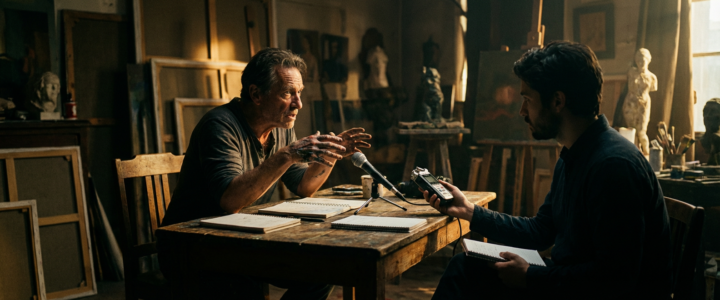
Walk down the cracked concrete steps into the Micro-Cinema Collective’s latest venue—a converted darkroom beneath a Thai restaurant in Queens—and you’ll witness something the film industry desperately needs but refuses to acknowledge. Tonight, Aria Blackwood’s sixteen-minute meditation on digital decay, “Signal/Noise,” unfolds on a hand-built screen while twenty-three people sit transfixed on mismatched chairs. The projection flickers occasionally because of the building’s ancient electrical system, but nobody moves to fix it. The instability becomes part of the work.
The Underground is Rising: Inside This Season's Most Vital Experimental Film Circuit
The Underground is Rising: Inside This Season’s Most Vital Experimental Film Circuit

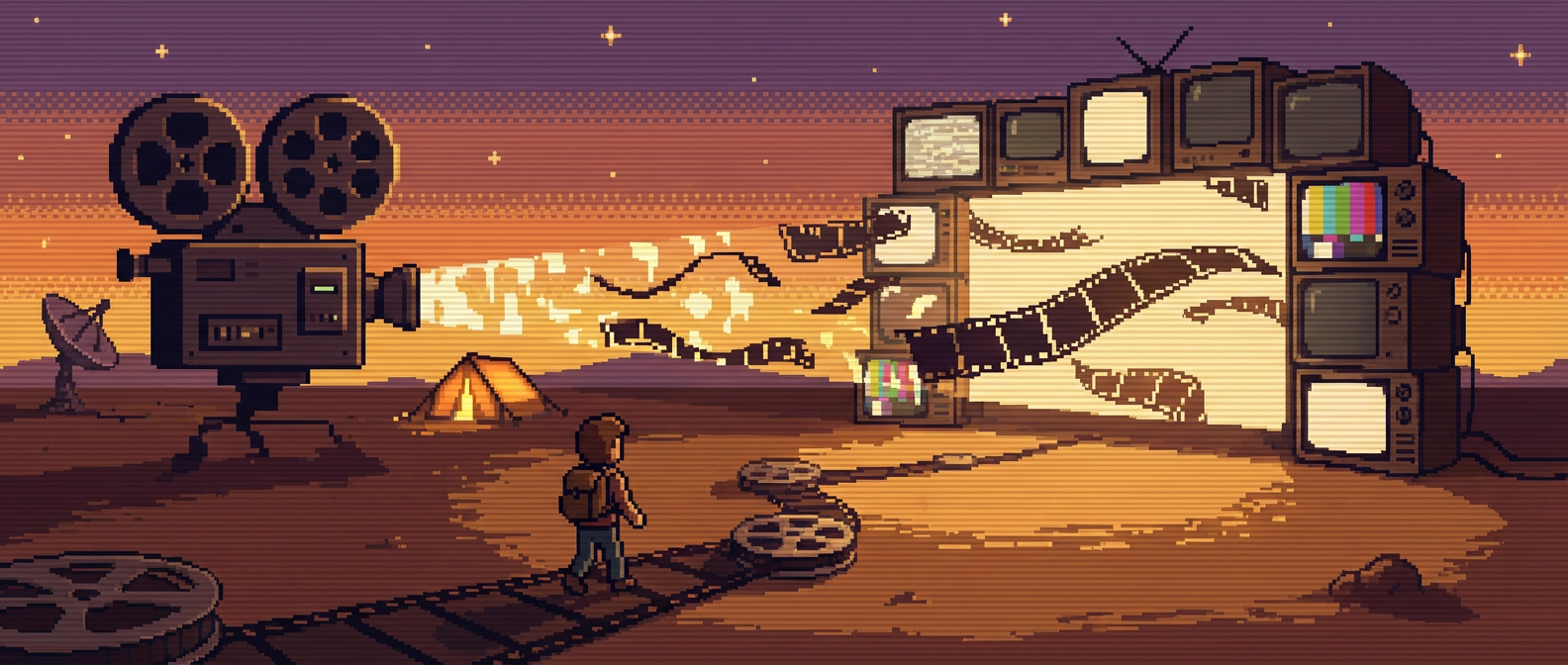
This is where cinema lives now, in spaces that smell like developer fluid and ambition. While Netflix algorithms push viewers toward comfort food and theatrical releases grow increasingly risk-averse, experimental filmmakers are carving out territories that feel genuinely subversive. They’re not just making different movies. They’re rebuilding the entire infrastructure of how moving images reach audiences.

The energy in these rooms has the urgency of necessity. When Blackwood discusses her latest piece after the screening, she references Jonas Mekas and Stan Brakhage with the same breath as TikTok compression artifacts and cryptocurrency mining farms. Her work doesn’t simply nod to the avant-garde tradition. It digests decades of experimental cinema and spits out something that speaks to our current moment of technological vertigo.
Illustration for The Underground is Rising: Inside This Season's Most Vital Experimental Film Circuit
Illustration for The Underground is Rising: Inside This Season’s Most Vital Experimental Film Circuit

Beyond the Festival Circuit: A New Distribution Ecology

The traditional experimental film festival circuit—dominated by institutions like the New York Film Festival’s “Views from the Avant-Garde” and the Ann Arbor Film Festival—still matters, but it’s no longer the only game worth playing. A new ecosystem has emerged, built around popup screenings, artist-run spaces, and hybrid digital-physical events that challenge every assumption about how experimental work finds its audience.

Take the Itinerant Image Collective, which operates out of a converted shipping container that travels between cities. Their curatorial approach treats each location as a collaborator, programming films that respond to local conditions. When they parked outside a defunct shopping mall in Akron last month, their selection included works about economic abandonment and architectural decay. The container’s metal walls created acoustic conditions that transformed the sound design of each piece.

This geographical specificity represents a profound shift from the white cube mentality that has long dominated experimental film exhibition. These programmers understand that context isn’t just important, it actually generates new meaning. The work changes based on where and how it’s shown, and the most interesting curators design experiences that amplify those transformations rather than minimize them.

The Technology Question: When Innovation Actually Serves Vision

The current wave of experimental filmmakers approaches technology with a sophistication that puts most commercial productions to shame. They’re not interested in technology for its own sake, but they’re unafraid to push tools in directions their manufacturers never intended. Maria Santos’s recent installation “Datacenter Lullaby” uses machine learning algorithms trained on surveillance footage to generate endless variations on the same empty office building. The result feels both hypermodern and eerily nostalgic, like watching the dreams of a digital security system.

This technological fluency extends beyond production into exhibition. The most compelling screening events now incorporate live performance, interactive elements, and site-specific installations that transform the viewing experience into something closer to theater or contemporary art. When filmmaker David Chen projects his Super 8 loops onto hand-blown glass sculptures while a cellist performs alongside, he’s not just showing a movie. He’s creating a temporary world with its own physical and temporal rules.

The democratization of sophisticated tools has unleashed a generation of artists who can realize ambitious visions without institutional support. But more importantly, they’re using those tools to ask questions about perception, memory, and consciousness that mainstream cinema won’t touch. These aren’t technical exercises. They’re philosophical investigations that happen to use moving images as their primary medium.

The Critics Are Missing the Point (Again)

Academic film criticism continues to approach experimental cinema with categories borrowed from narrative filmmaking, resulting in reviews that sound like botanical descriptions of alien plant life. The language feels inadequate because the framework is wrong. These works don’t want to be understood in terms of character development or narrative structure. They’re operating in the realm of pure sensation and conceptual investigation.

Meanwhile, the art world press treats experimental film like a curious appendage to video art, missing the specific histories and concerns that drive the medium. The result is a critical discourse that fails to capture what makes this work urgent and necessary. When a major art magazine describes a challenging experimental film as “meditative” or “hypnotic,” they’re usually signaling their inability to engage with what the work is actually doing.

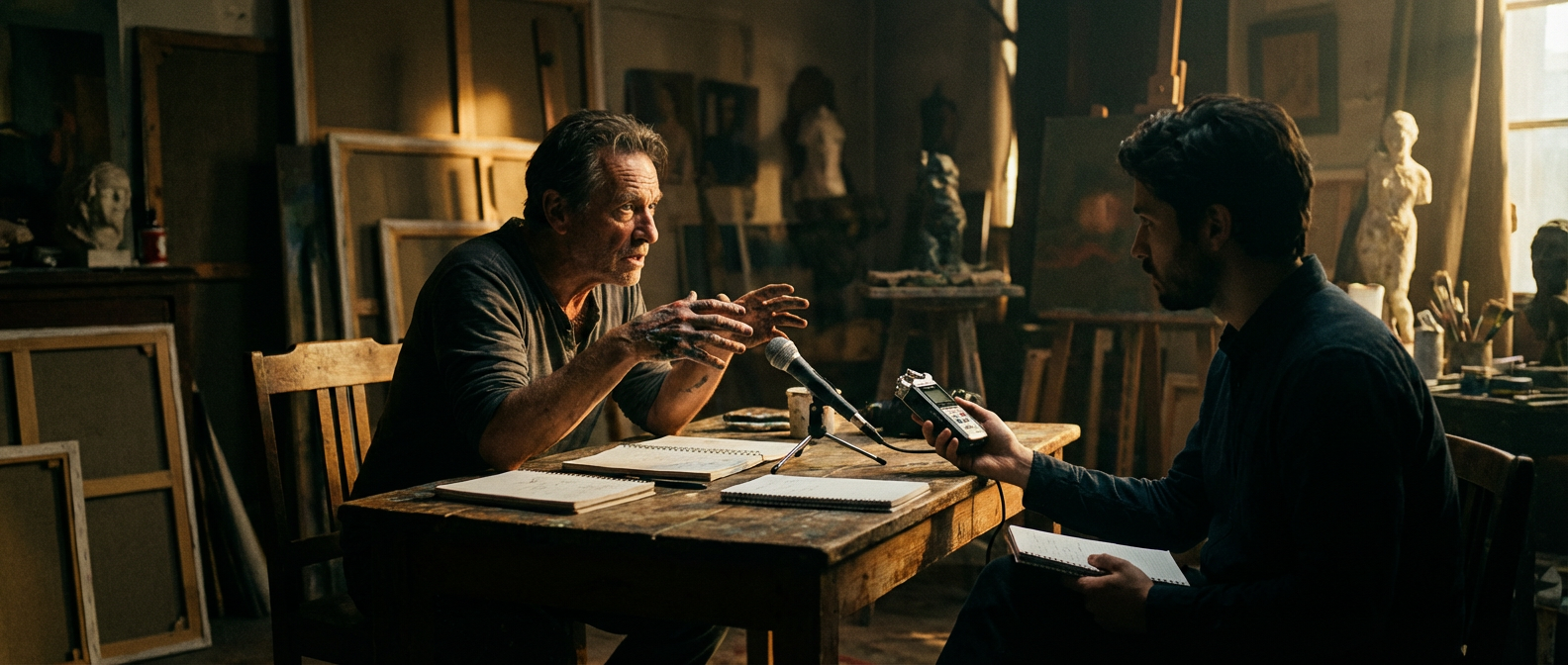
The most valuable criticism is emerging from the filmmakers themselves, through artist talks, program notes, and informal conversations that happen after screenings. They’re developing new vocabularies for discussing work that operates outside established categories. Listen to two experimental filmmakers discuss frame rates and emulsion types, and you’ll hear a technical conversation that’s simultaneously philosophical and deeply personal.

What Happens Next: The Stakes of This Moment

The current flowering of experimental cinema is happening while the entertainment industry grows more conservative by the quarter. As streaming platforms consolidate around proven formulas and theatrical releases chase global markets that favor spectacle over speculation, these alternative spaces become increasingly important. They’re preserving not just different ways of making movies, but different ways of thinking about what movies can be.

The sustainability question looms large. Many of these initiatives operate on financial margins so thin they make shoestring budgets look luxurious. But their influence extends far beyond their immediate audiences. Commercial filmmakers are quietly studying techniques pioneered in basement screenings. Gallery artists are incorporating durational strategies developed by experimental filmmakers. The innovations percolate upward, even when the innovators receive no credit.

This underground network is cinema’s immune system, a space where the medium can experiment, mutate, and evolve without market pressures or institutional gatekeeping. As the mainstream film industry becomes increasingly predictable, these margins become the center. They’re where the future is being imagined, one flickering projection at a time.

If you’re curious about what’s happening in your area, start checking the bulletin boards at local art schools and independent bookstores. The most interesting screenings are often announced through cryptic flyers and word-of-mouth networks that feel deliberately exclusive but welcome genuine enthusiasm. Show up with an open mind and prepare to have your assumptions about cinema systematically dismantled.
The Ghost in the Machine: Why Artistic Lineage Matters More Than Your MFA Program Taught You

The Ghost in the Machine: Why Artistic Lineage Matters More Than Your MFA Program Taught You

The Dangerous Myth of Spontaneous Genius

Every semester, another crop of art students emerges convinced they’ve discovered something entirely new, armed with smartphones and a dangerous ignorance of their own lineage. They create installations about digital alienation without knowing Nam June Paik, make videos about surveillance culture without referencing Chris Marker, and paint gestural abstractions as if Helen Frankenthaler never existed. This willful amnesia isn’t just embarrassing. It’s artistic malpractice.

The Ghost in the Machine: Why Artistic Lineage Matters More Than Your MFA Program Taught You

The myth of spontaneous genius has infected contemporary art education like a virus. Students are taught to “find their voice” before they understand the conversation they’re entering. They’re encouraged to break rules they’ve never learned, to rebel against traditions they can’t name. The result? A generation of artists producing work that feels revolutionary to them but reads as derivative to anyone with a functioning knowledge of art history.

Take the recent exhibition I attended where a young artist presented photographs of empty swimming pools as a meditation on suburban decay. The work was competent, even striking. But watching viewers nod appreciatively at this “fresh perspective” while standing five feet from a poster advertising the museum’s upcoming Edward Ruscha retrospective made my teeth ache. The artist’s statement made no mention of Ruscha, David Hockney, or even Joel Sternfeld. This wasn’t homage or dialogue. It was unconscious plagiarism dressed up as innovation.

Illustration for The Ghost in the Machine: Why Artistic Lineage Matters More Than Your MFA Program Taught You

Influence as Archaeological Excavation

Real artistic influence works like archaeology. The most interesting discoveries happen when artists dig deep enough to find connections that aren’t immediately obvious. When Kehinde Wiley places contemporary Black subjects into classical European portrait formats, he’s not just making a political point. He’s excavating layers of art historical power structures, revealing how pose, setting, and symbolism have always carried coded messages about who deserves to be memorialized.

The best artists become forensic investigators of their own influences. Kerry James Marshall doesn’t just reference comic books in his paintings because he grew up reading them. He understands how comic book illustration techniques developed from newspaper printing limitations, how those limitations shaped visual storytelling, and how adapting those techniques to fine art painting creates a specific tension between high and low culture.

This kind of deep excavation requires more than casual browsing through art books. It demands understanding not just what influenced an artist, but why those influences were available to them, what they were reacting against, and how they transformed borrowed elements into something genuinely new. When Jean-Michel Basquiat incorporated imagery from Gray’s Anatomy into his paintings, he wasn’t just using cool-looking pictures. He was commenting on how medical illustration creates a clinical distance from the human body, then disrupting that distance with his raw, immediate mark-making.

The Living Archive of Artistic DNA

Every significant artwork contains multitudes. Picasso‘s “Les Demoiselles d’Avignon” simultaneously references Iberian sculpture, African masks, Cézanne’s geometric innovations, and classical European painting traditions. But understanding these influences isn’t an academic exercise. It’s the key to understanding why the painting still feels dangerous more than a century later.

The most sophisticated contemporary artists treat influence like DNA sampling. They extract specific elements from their sources and recombine them in ways that reveal new possibilities. Kara Walker‘s silhouette installations draw from Victorian parlor entertainments, antebellum propaganda imagery, and fairy tale illustration traditions. But she doesn’t simply grab these sources wholesale. She amplifies their inherent violence and contradiction, using their own visual languages to expose the brutality they originally helped to mask.

This approach requires artists to develop what I call “X-ray vision” for influence. They need to see through surface similarities to understand structural relationships. When young artists tell me they’re inspired by Banksy, I ask them to trace Banksy’s lineage back through Jenny Holzer, Barbara Kruger, situationist graphics, and early graffiti culture. Only then can they understand what makes Banksy’s work effective beyond its immediate visual appeal.

Beyond Name-Dropping: Influence as Transformation

The difference between sophisticated influence and lazy appropriation lies in transformation. Weak artists borrow surfaces. Strong artists borrow structures, systems, and ways of seeing. Cindy Sherman didn’t just dress up like characters from old movies for her “Untitled Film Stills” series. She deconstructed how film noir and European art cinema used lighting, composition, and costume to create psychological narratives about femininity.

This distinction becomes crucial when evaluating contemporary work that draws from marginalized or colonized cultures. The question isn’t whether cross-cultural influence is acceptable, but whether the borrowing artist has done the work to understand the cultural and historical context of what they’re using. When David Wojnarowicz incorporated imagery from non-Western cultures into his work, he was explicit about how those cultures had been systematically destroyed by the same forces that were destroying his community during the AIDS crisis.

The most powerful artistic influences often come from unexpected sources. Agnes Martin‘s grid paintings draw as much from her experience of the New Mexico landscape as from minimalist theory. Felix Gonzalez-Torres found ways to embed political urgency into the cool conceptual strategies he inherited from Sol LeWitt and Donald Judd. These artists understood that influence isn’t about similarity. It’s about finding tools that can be repurposed for your own urgent purposes.

The Responsibility of Knowing Where You Come From

Every artist exists within multiple lineages at once. Understanding these connections isn’t about limiting creativity or paying dues to the past. It’s about joining conversations that are already in progress, adding your voice to ongoing debates about what art can do and how it can matter. When you know your lineage, you can push against it more effectively.

The artists who interest me most are those who can articulate not just what they’re making, but why their work needs to exist given everything that came before it. They understand that originality isn’t about starting from scratch. It’s about finding new ways to extend, complicate, or redirect existing conversations.

This knowledge creates responsibility. Once you understand how your work fits into larger patterns of cultural production, you can’t pretend that your choices are purely personal or aesthetic. Every formal decision carries historical weight. Every material choice connects you to other artists who faced similar problems or possibilities.

What conversations are you joining with your work? Which artists are you in dialogue with, consciously or unconsciously? These aren’t just academic questions. They’re the foundation of artistic practice that aspires to be more than self-expression. I’d love to hear about the unexpected influences you’ve discovered in your own archaeological excavations, and how they’ve shaped your understanding of what’s possible in contemporary art.

Running AI Characters Locally: What You Actually Need Beyond the Hype

Running AI Characters Locally: What You Actually Need Beyond the Hype

The Reality Behind Local AI Character Generation

Local AI character generation has captured the imagination of creators, writers, and AI enthusiasts worldwide. The positive coverage is mostly deserved. Which is exactly why it’s worth taking a clear-eyed look at what isn’t working. The technology has come a long way, but there’s still a big gap between what companies promise and what most people can actually pull off at home.

Running AI Characters Locally: What You Actually Need Beyond the Hype

Here’s what challenges how most people think about this. The question worth asking first: why does this matter right now?

Running good AI characters on your own hardware takes more than downloading an app and hitting start. You’re looking at serious technical requirements, constant maintenance, and quality issues that catch most people off guard. Getting real about these problems upfront helps you figure out if local deployment actually makes sense for what you want to do.

Illustration for Running AI Characters Locally: What You Actually Need Beyond the Hype

Hardware Requirements That Actually Matter

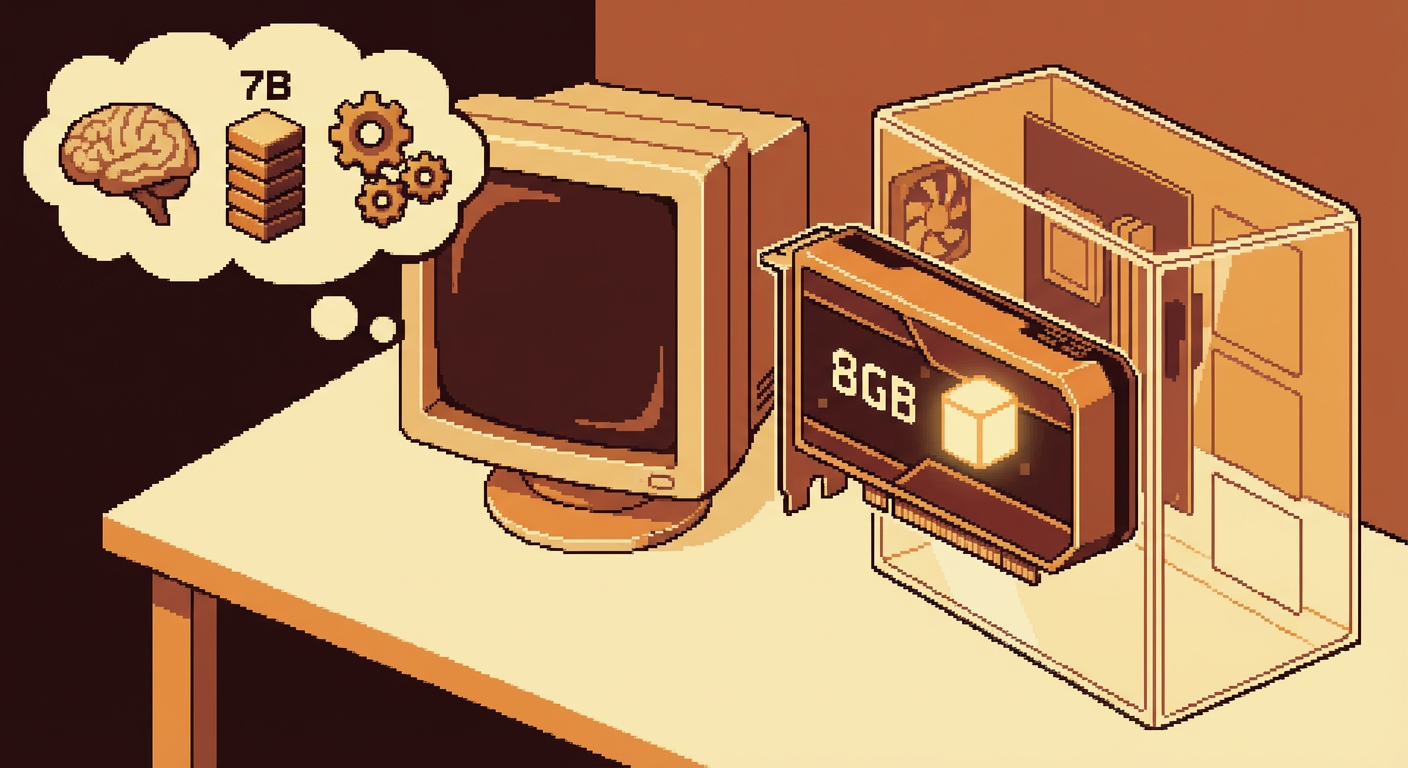
Any decent local AI character setup starts with graphics processing power. Quality 7-billion-parameter models need graphics cards with at least 8 gigabytes of video memory to run without choking. This cuts out most consumer laptops and budget desktop systems right away. Cards like the RTX 4070 or RTX 4060 Ti are your entry point for decent performance. If you want to run larger models or get faster response times, you’re looking at RTX 4080 or 4090 territory.

There are workarounds for people without powerful graphics hardware. Quantized GGUF models running through llama.cpp let you use just your CPU, but you’re trading performance and quality for compatibility. These setups work on regular computer hardware but the output quality drops noticeably and generation crawls. Fine for messing around, but it’ll disappoint you if you’re trying to do serious creative work.

System memory matters too, especially if you’re running CPU-only. Models without GPU acceleration can eat up 16 to 32 gigabytes of RAM depending on size and how they’re optimized. Even GPU setups benefit from plenty of system memory to handle your operating system, frontend apps, and model loading without hiccups.

Software Ecosystem and Configuration Challenges

The software side revolves around established backend systems that handle model loading and inference. Oobabooga text-generation-webui and KoboldAI are the main backend options if you’re running SillyTavern documentation as your frontend. These tools work well once configured but getting there takes effort.

Installation means getting multiple components to work together. You’ll install Python environments, download multi-gigabyte model files, configure GPU acceleration libraries, and set up communication between frontend and backend apps. Each step can break, and troubleshooting frustrates people without technical experience. Documentation exists but usually assumes you’re comfortable with command lines and debugging.

Model selection makes or breaks your experience. Base models trained for general language tasks usually suck at creative roleplay compared to specialized fine-tuned versions. Uncensored variants specifically trained for creative fiction create much better character interactions, but you need to research and identify quality options from a massive pile of choices. The difference between a mediocre model and a great one completely changes how this feels to use.

Maintenance Overhead and Ongoing Costs

Local AI setups need constant attention to keep working well. Backend applications get frequent updates that might require reinstallation or configuration changes. New models come out regularly, each promising better quality, speed, or capabilities. Frontend interfaces change rapidly as developers add features and fix bugs. Keeping everything working together becomes an ongoing project, not a one-time setup.

Hardware costs don’t stop at purchase. High-performance graphics cards suck down serious electricity, especially during long generation sessions. You need better cooling to handle the heat from sustained GPU use. Storage requirements grow as you collect multiple models, each taking several gigabytes. These running costs add up, particularly if you use characters frequently.

Time investment might be the biggest hidden cost. Learning the ecosystem, fixing problems, updating software, and experimenting with different models and settings takes dozens of hours initially plus ongoing attention. If you just want to interact with characters rather than tinker with AI systems, this overhead can completely overwhelm the actual experience.

Alternatives to Self-Hosting

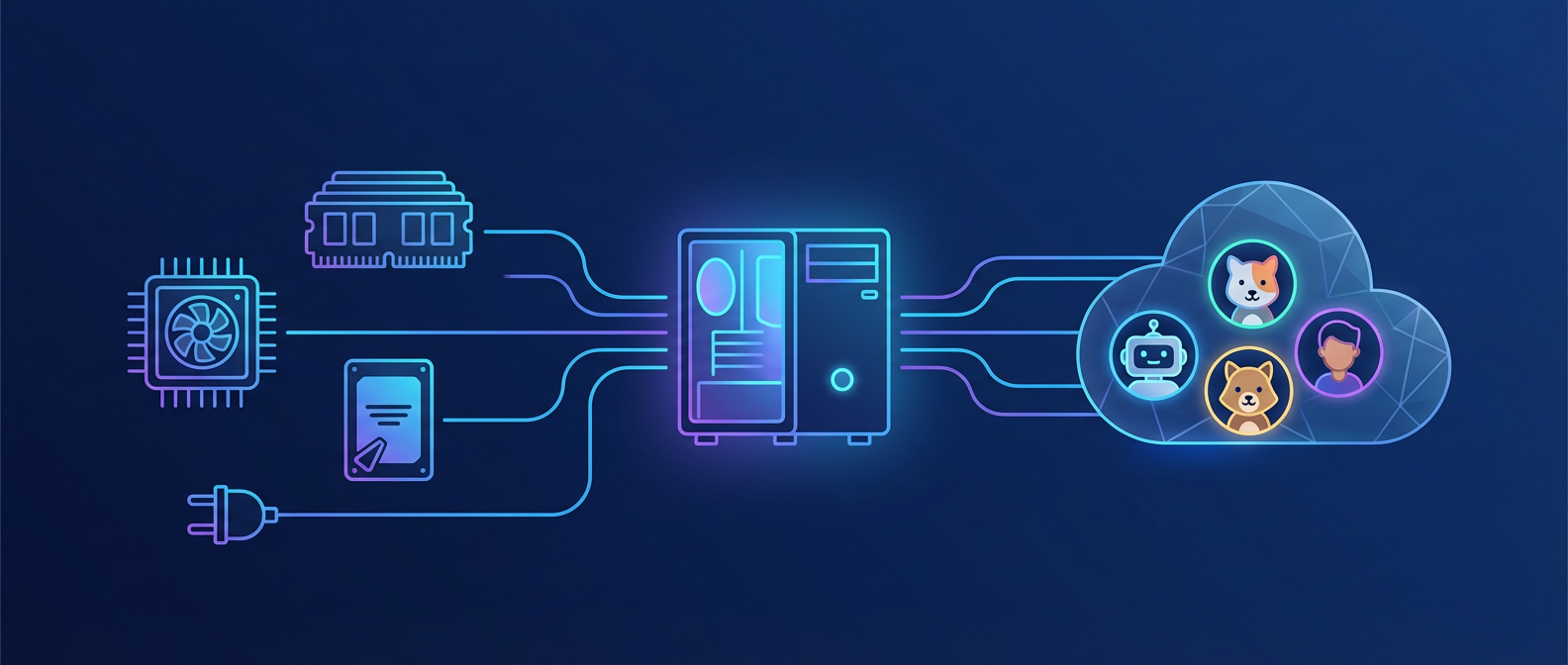
Managed hosting services have popped up to handle the complexity and maintenance burden of local setups. These platforms manage hardware, software configuration, and models while giving you user-friendly interfaces for character interaction. Services like Hearthside Chat remove the technical barriers that stop many people from accessing quality AI characters, though you’re depending on external providers and paying ongoing subscription costs.

The choice between local and hosted solutions comes down to what matters most to you. Local deployment gives you complete control, privacy, and freedom from service outages but requires significant technical investment and constant maintenance. Hosted alternatives offer convenience and reliability while limiting customization options and requiring trust in third-party providers. You need to weigh these factors against your specific needs, technical skills, and budget.

For most potential users, especially those who want character interaction rather than AI experimentation, managed services make the most sense. The hardware requirements, configuration complexity, and maintenance overhead of local setups create barriers that might never justify the benefits for casual users.

The barrier to running this AI roleplay tool has always been the technical setup. Hearthside Chat removes that barrier entirely, same experience, no configuration required.

The conversation about this is as valuable as the thing itself. Tell us what we missed in the comments.

The Alchemy of Accident: Inside Marina Volkov’s Controlled Chaos

The Alchemy of Accident: Inside Marina Volkov’s Controlled Chaos

When Precision Meets Pandemonium

Marina Volkov’s studio feels like a laboratory designed by a mad scientist who moonlights as a mathematician. Plastic sheets cover every surface, punctured with deliberate holes at precise intervals. Suspended above her workspace hang dozens of modified spray bottles, each filled with different viscosities of paint, positioned at calculated angles that would make a ballistics expert weep with envy. This is where controlled chaos becomes art, where Volkov has spent the last eight years perfecting what she calls “orchestrated accidents.”

The Alchemy of Accident: Inside Marina Volkov's Controlled Chaos
The Alchemy of Accident: Inside Marina Volkov’s Controlled Chaos

The Russian-born, Berlin-based painter has zero patience for romantic notions about spontaneous creation. “People see the drips and splatters and think it’s all intuitive gesture,” she explains while adjusting a motorized armature that rotates canvases at variable speeds. “But every ‘accident’ is the result of months of calculation. I’ve mapped the trajectory patterns of over 200 different paint consistencies. I know exactly where each drop will land before it leaves the bottle.”

This methodical approach to apparent randomness makes Volkov the spiritual heir to Jackson Pollock’s systematic experiments, but with a contemporary twist that would horrify action painting purists. Where Pollock trusted his body’s movement, Volkov trusts her machines. Where he sought to eliminate the conscious mind from mark-making, she programs consciousness into every mechanized gesture.

Illustration for The Alchemy of Accident: Inside Marina Volkov's Controlled Chaos
Illustration for The Alchemy of Accident: Inside Marina Volkov’s Controlled Chaos

The Architecture of Unpredictability

Volkov’s process begins not with paint but with mathematical modeling software typically used by engineers. She inputs variables including canvas dimensions, ambient temperature, humidity levels, and the specific gravity of her custom paint mixtures. The resulting algorithms generate what she calls “probability maps” that predict the likely landing zones for each paint application. It’s a framework of calculated uncertainty.

Her paint recipes deserve their own scientific paper. Each color is mixed with varying amounts of silicone oils, alcohol, and proprietary additives that alter surface tension and drying time. “The yellow has 12% isopropyl alcohol and a stabilizer I borrowed from automotive paint technology,” she notes, pulling out a notebook filled with formulas that read like chemistry homework. “It creates cellular patterns when it hits the canvas that are impossible to achieve with traditional media.”

The actual painting happens in layers, each applied by different mechanical systems. First, a series of pendulums swing across the horizontal canvas, releasing controlled amounts of base colors. Then, rotating spray mechanisms add secondary hues while the canvas moves through predetermined positions. Finally, Volkov introduces what she calls “chaos agents,” compressed air bursts that disrupt still-wet paint in calculated intervals.

Beyond the Brushstroke: Rethinking Painter’s Tools

Traditional painting tools have no place in Volkov’s arsenal. She collaborates with a team of engineers to build custom applicators that would be equally at home in a manufacturing facility or a physics lab. Her latest invention is a device she calls the “vector sprayer,” a computer-controlled nozzle system that can apply paint at angles impossible for human hands while maintaining microscopic precision in droplet size.

The canvas preparation alone takes three days. Each surface receives multiple primer layers, with specific areas masked to control paint absorption rates. “I’m painting the painting before I paint the painting,” Volkov explains. “The canvas becomes a topographical map of planned interactions.” She documents every variable obsessively, creating detailed production notes that read like surgical procedures.

Her color mixing happens in temperature-controlled conditions, with each batch tested on sample surfaces before application. Paint consistency is measured with viscometers, and each mixture’s behavior is documented through slow-motion video analysis. This isn’t romantic artist intuition. This is industrial research and development applied to fine art production.

The Philosophy of Programmed Spontaneity

Critics often struggle with Volkov’s mechanical approach, viewing it as opposite to painting’s expressive tradition. She anticipated this resistance. “People want painters to be emotionally driven, romantically inspired,” she says while calibrating a pressure gauge. “But why should the source of creative input matter more than the quality of creative output? My machines are extensions of my artistic vision, just like Michelangelo’s chisels were extensions of his.”

The conceptual framework underlying her work draws from chaos theory and systems thinking rather than art historical precedents. Each painting explores the boundary between determinism and randomness, questioning whether true spontaneity can exist within structured parameters. “I’m interested in the moment when control breaks down,” she explains. “But I want to engineer that breakdown precisely.”

Her latest series, “Probability Studies,” pushes this investigation further. Each painting exists in multiple versions. The same initial parameters generate different outcomes through microscopic variations in environmental conditions. She’s essentially creating artistic experiments with built-in control groups, treating her studio like a research facility that happens to produce wall-worthy results.

Documentation as Secondary Creation

Perhaps most fascinating is Volkov’s documentation process. Every painting session is recorded from multiple angles using high-speed cameras. The resulting footage becomes source material for video installations that show the paintings’ creation in compressed time. “The process is as much the artwork as the final object,” she insists. “I’m making visible the usually invisible act of creation.”

Her studio walls display time-lapse sequences showing paint behavior under different conditions. These studies inform future work while functioning as artworks themselves. Gallery visitors often spend more time watching the process videos than examining the finished paintings, suggesting that Volkov’s true innovation lies in making artistic methodology itself a viewable medium.

The meticulous record-keeping has practical purposes too. Each painting comes with a complete “recipe” that theoretically allows for reproduction, though Volkov notes that environmental variables make exact duplication impossible. “It’s like cooking,” she explains. “I can give you my recipe, but your version will taste different because your kitchen isn’t identical to mine.”

Volkov’s systematic dismantling of painting’s romantic myths reveals new possibilities for artistic creation in an era of technological integration. Her work suggests that precision and spontaneity need not be opposing forces, that calculation can help inspiration rather than stifle it. Whether her approach represents painting’s future or an elaborate conceptual dead end remains an open question worth debating over dinner, preferably one where someone has the nerve to challenge received wisdom about what authentic artistic creation actually looks like.

The Colonization of Fine Art by Pop Culture Is Complete (And Maybe That’s Not the Disaster We Think It Is)

The Colonization of Fine Art by Pop Culture Is Complete (And Maybe That’s Not the Disaster We Think It Is)

The Gallery Wall Has Fallen

Walk into any major contemporary art museum today and you’ll encounter something that would have scandalized the cultural gatekeepers of fifty years ago: pop culture isn’t just influencing fine art anymore, it has thoroughly conquered it. The Metropolitan Museum’s recent Costume Institute exhibitions drawing crowds that dwarf attendance at painting galleries. KAWS sculptures commanding eight-figure auction prices. Street artists like Banksy and Shepard Fairey transitioning from wheat-paste rebellion to white-cube legitimacy. The supposed hierarchy that once separated high culture from mass entertainment has collapsed so completely that we’re left wondering if it ever existed at all.

The Colonization of Fine Art by Pop Culture Is Complete (And Maybe That's Not the Disaster We Think It Is)
The Colonization of Fine Art by Pop Culture Is Complete (And Maybe That’s Not the Disaster We Think It Is)

This isn’t the gentle cross-pollination that art historians like to trace back to Warhol’s soup cans or Lichtenstein’s comic strips. Those pioneers were still operating within a framework that acknowledged boundaries, even as they playfully transgressed them. Today’s culture operates on entirely different principles. When Takashi Murakami collaborates with Louis Vuitton, when Kerry James Marshall’s paintings reference comic book aesthetics, when museums program blockbuster shows around video game design, we’re witnessing something more profound than influence. We’re seeing the complete integration of cultural production.

The Purist Panic Is Missing the Point

The predictable response from traditional art world voices has been hand-wringing about the death of serious culture, lamenting that Instagram-friendly installations are displacing contemplative painting, that market-driven spectacle has replaced genuine aesthetic inquiry. This criticism isn’t entirely wrong, but it’s asking the wrong questions. The real issue isn’t whether pop culture is corrupting fine art, but whether our inherited categories for understanding culture were ever as meaningful as we pretended they were.

Consider the historical precedent that these cultural conservatives conveniently ignore. Caravaggio painted for popular religious sentiment as much as aristocratic patronage. Shakespeare wrote for groundlings as well as nobles. Even the most revered artists of the Renaissance were responding to the mass culture of their time, which happened to be religious pageantry rather than Marvel movies. The notion that serious art exists in splendid isolation from popular taste is a relatively recent invention, dating roughly to the late 19th century when cultural institutions needed to justify their relevance to industrializing societies.

What we’re witnessing isn’t cultural decline but rather a return to a more historically normal relationship between different modes of creative expression. The artificial separation between high and low culture was always more about class distinction than aesthetic value. When that separation collapses, we don’t lose culture. We get more honest about what culture actually is.

The New Rules of Cultural Production

The integration of pop cultural elements into fine art isn’t happening randomly or superficially. There are new logics at work that reflect genuine shifts in how meaning gets made and circulated in contemporary society. Social media has democratized both creation and curation in ways that make traditional gatekeeping mechanisms increasingly irrelevant. An artist can build a substantial following and critical reputation without ever setting foot in a gallery, while established institutions scramble to remain relevant to audiences whose cultural literacy has been shaped by entirely different reference points.

This shift manifests in fascinating ways across different mediums. In painting, artists like Amy Sherald and Jordan Casteel are creating portraits that explicitly reference fashion photography and celebrity portraiture, but with a sophistication of color and composition that challenges traditional academic hierarchies. In sculpture, artists are working with materials and processes borrowed from industrial design and consumer products, creating works that function simultaneously as art objects and commentary on mass production. The result isn’t a dumbing down of fine art but rather an expansion of its vocabulary.

Meanwhile, pop culture itself has become increasingly sophisticated in its aesthetic ambitions. Musicians like Frank Ocean and Solange are creating albums that function as total conceptual artworks, complete with accompanying visual installations and performance pieces. Film directors like Jordan Peele and Ari Aster are making horror movies that operate as complex allegories about race and capitalism while still delivering genuine scares. The traditional assumption that popularity necessarily means aesthetic compromise no longer holds.

The Economics of Cultural Value

The art market’s embrace of pop culture-influenced work reveals uncomfortable truths about how cultural value has always functioned. When a Kaws sculpture sells for more than a traditional landscape painting, critics cry manipulation, but they’re ignoring the ways that all art valuation depends on cultural consensus and institutional validation. The difference is that today’s consensus is being shaped by a broader and more diverse range of voices than the small circle of critics, curators, and collectors who once controlled the conversation.

This democratization of taste-making has produced some genuinely significant artistic achievements alongside plenty of forgettable trend-chasing. Artists like Kehinde Wiley and Kara Walker have used pop cultural strategies and imagery to create work that functions as both spectacular entertainment and serious political commentary. Their success points toward possibilities for cultural production that doesn’t require choosing between accessibility and intellectual rigor.

The old model of cultural authority depended on scarcity and exclusivity. The new model operates through circulation and engagement. This shift has profound implications for how we understand artistic value and cultural significance. When everyone can be a critic and every platform can be a gallery, the mechanisms that determine what matters have to change accordingly.

Beyond the False Binary

Perhaps the most productive way forward is to abandon the framework that pits pop culture against fine art entirely. The most interesting cultural work being produced today operates across these supposedly distinct categories, drawing power from the tension between different aesthetic traditions and audience expectations. Artists like Solange Knowles create work that functions simultaneously as pop music, performance art, and social activism. Directors like Chloé Zhao make films that work as both crowd-pleasing entertainment and formally innovative cinema.

This convergence doesn’t represent a compromise or a dilution of artistic integrity. Instead, it reflects a more sophisticated understanding of how culture actually functions in contemporary society. The most vital artistic work has always been in conversation with its historical moment, responding to and helping to shape the concerns and obsessions of its time. In an era when pop culture is the primary language through which most people encounter aesthetic experience, artists who ignore or reject that reality do so at their own peril.

The question isn’t whether pop culture’s dominance is good or bad for fine art, but rather how artists and audiences can navigate this new territory productively. The collapse of old hierarchies creates opportunities as well as challenges, opening up spaces for voices and perspectives that were previously excluded from serious cultural consideration. What emerges from this chaos might look nothing like what we’ve traditionally called fine art, but it might be something more important: a genuinely democratic form of cultural expression that doesn’t sacrifice complexity for accessibility. The revolution is already here. The only question is whether we’re brave enough to recognize it.