The Hidden Power Structures Shaping What You See
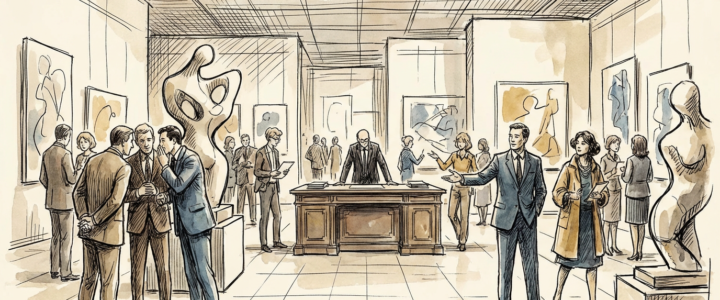
Walk into any contemporary art gallery and you’re not just entering a neutral white cube. You’re stepping into a carefully orchestrated battlefield where money, taste, and cultural influence collide in ways that would make Machiavelli dizzy. The pristine walls and hushed tones mask a complex ecosystem of dealers, collectors, critics, and artists all vying for position in a hierarchy that determines which voices get amplified and which fade into obscurity.

Consider the recent controversy surrounding Hauser & Wirth’s expansion strategy. When mega-galleries like this one plant flags in new cities, they’re not just opening retail spaces. They’re establishing cultural beachheads that can reshape entire local art scenes. Small galleries that once championed emerging local talent suddenly find themselves competing with institutions backed by hundreds of millions in collector relationships. It’s David versus Goliath, except Goliath has a marketing budget larger than most museums’ annual operating costs.
This isn’t abstract theory playing out in ivory towers. These power dynamics directly impact what art gets made, shown, and preserved for future generations. When a handful of galleries control access to the most influential collectors and museums, they essentially become cultural gatekeepers. Understanding this system isn’t just insider baseball for art world wonks. It’s basic literacy for anyone who cares about how culture gets created and distributed.

The Collector-Dealer Industrial Complex
The relationship between top-tier dealers and their collector base operates like a sophisticated matchmaking service crossed with a hedge fund. Dealers don’t just sell art; they create entire cultural narratives around their stable of artists. Take David Zwirner’s handling of the Kerry James Marshall market. By strategically placing works with the right institutional and private collectors, Zwirner didn’t just increase Marshall’s prices. He positioned Marshall as an essential voice in contemporary painting, making his work feel both historically significant and investment-grade.
This symbiotic relationship creates what economists call “manufactured scarcity.” Galleries maintain waiting lists for hot artists, doling out works to collectors who have demonstrated loyalty and purchasing power across multiple artists in the gallery’s stable. It’s a system that rewards the already wealthy while creating artificial barriers for newer collectors or institutions with smaller budgets. The Metropolitan Museum might have to wait in line behind a hedge fund manager for the next Kaws sculpture.
But here’s where it gets interesting: some dealers are actively working to disrupt their own industry. Gavin Brown’s decision to leave his Chelsea mega-space for a more modest operation in Harlem wasn’t just about rent costs. It was a philosophical statement about gallery culture’s increasing detachment from artistic risk-taking. Brown recognized that the pressure to maintain ever-larger spaces and staff forces dealers into conservative programming choices that prioritize marketability over innovation.
The Museum-Gallery Revolving Door
The boundaries between commercial galleries and nonprofit museums have become increasingly blurred, creating ethical complexities that would have scandalized previous generations of curators. Museum directors regularly sit on gallery boards. Curators leave institutions to become private advisors. Gallery owners donate works to museums where their friends are trustees. These relationships aren’t necessarily corrupt, but they create an echo chamber where the same aesthetic and cultural values get reinforced across supposedly independent institutions.
Look at Klaus Biesenbach’s trajectory from MoMA PS1 to the Museum of Contemporary Art Los Angeles. His programming choices at both institutions reflected relationships built during his earlier commercial gallery work in Berlin. When Biesenbach champions certain artists or movements, he’s not operating in a vacuum. He’s drawing on a network of relationships that span decades and continents, all connected through the art market’s circulatory system.
This interconnectedness can produce genuinely exciting results when it works well. The collaboration between Tate Modern and various commercial galleries on large-scale installations has created some of the most memorable museum experiences of the past decade. But it also raises questions about whose interests are really being served when a museum’s exhibition program starts looking suspiciously similar to blue-chip gallery rosters.
Regional Scenes and Geographic Hierarchies
The art world’s obsession with certain geographic centers creates a self-perpetuating cycle that marginalizes entire regions of cultural production. New York, London, and Hong Kong function as the holy trinity of the contemporary art market, with Los Angeles and Berlin as important secondary markets. Everyone else fights for scraps of attention from the international circuit.
But this hierarchy is more fragile than it appears. The pandemic forced galleries to experiment with digital viewing rooms and virtual programming, accidentally democratizing access in ways that threaten traditional geographic advantages. A collector in São Paulo could suddenly participate in preview events that were previously limited to Manhattan insiders. Some galleries discovered that their online programming reached more engaged audiences than their physical openings ever had.
Cities like Detroit, New Orleans, and Phoenix have used this disruption to their advantage, developing distinct artistic identities that don’t depend on validation from coastal tastemakers. The Contemporary Arts Museum Houston’s recent focus on Gulf Coast artists isn’t just regional boosterism. It’s a strategic recognition that authentic cultural production happens everywhere, not just in rent-controlled studios in Bushwick.
How to Engage Without Getting Played
Understanding gallery politics doesn’t mean becoming cynical about the entire enterprise. Some of the most transformative art of the past century has emerged from this flawed system, often by artists and dealers who figured out how to game it for genuinely progressive purposes. The key is developing enough literacy to distinguish between genuine innovation and sophisticated marketing.
Start by following the money, but don’t stop there. When a gallery announces a new artist representation, research the artist’s exhibition history, institutional relationships, and critical reception over time. Has this artist been developing a consistent practice, or does their sudden prominence coincide suspiciously with market trends? Are museums acquiring their work, or just collectors? These patterns reveal more about artistic significance than any press release.
Pay attention to galleries that take risks on unconventional programming or support artists through lean periods rather than just during hot streaks. Spaces like Miguel Abreu Gallery in New York or Koppe Astner in Glasgow have built reputations by maintaining consistent artistic vision regardless of market pressures. Their programming choices offer a counterpoint to the algorithmic predictability of art fair booths.
The art world’s political machinations can feel intimidating, but they’re also endlessly fascinating once you start recognizing the patterns. Every opening becomes a chance to decode power relationships, spot emerging trends, and witness the real-time creation of cultural value. Jump in, ask questions, and remember that the most interesting conversations happen when someone challenges the room’s assumptions.