When First-Time Creators Blow Up the Rulebook: Five Debuts That Rewrote Their Genres

The Moment Everything Changed

Picture this: you’re sitting in a darkened theater in 1941, expecting another standard crime drama. Instead, you’re watching Orson Welles tear apart every filmmaking convention you thought was sacred in “Citizen Kane.” The deep focus shots, the non-linear narrative, the expressionist lighting, none of it should work according to Hollywood’s established playbook. Yet here’s a 25-year-old director with zero feature film experience completely redefining what cinema could be.

This is what happens when fresh voices enter established art forms without the baggage of “how things are supposed to be done.” They don’t know the rules well enough to be intimidated by them. I want to look at five debut works that didn’t just make a splash. They completely altered the DNA of their genres, creating new languages that artists are still speaking decades later.

Breaking the Fourth Wall of Hip-Hop

Before Lauryn Hill dropped “The Miseducation of Lauryn Hill” in 1998, hip-hop had clear gender lines. Women rappers were expected to be either hyper-aggressive battle MCs or sex-positive party anthems. Hill’s solo debut obliterated these categories entirely. She wove together rap, neo-soul, reggae, and gospel while addressing motherhood, spirituality, and Black womanhood with unprecedented vulnerability.

The album’s genius lies in its classroom metaphor. It literally has interludes of children discussing love and relationships. Hill transformed hip-hop from a genre that often treated women as subjects into one where a woman could be the professor. Songs like “Ex-Factor” demonstrated that rap could handle the same emotional complexity as jazz or blues, while “Lost Ones” proved that conscious hip-hop didn’t require sacrificing musical innovation.

What makes this even more remarkable is that Hill was primarily known as one-third of the Fugees. Nobody expected her to single-handedly expand hip-hop’s emotional vocabulary. Yet “Miseducation” sold over 19 million copies worldwide and influenced everyone from Kanye West to Kendrick Lamar to approach vulnerability differently in their own work.

Stripping Literature Down to Its Bones

Raymond Carver’s 1976 collection “Will You Please Be Quiet, Please?” arrived like a bucket of cold water to the face of American literature. While his contemporaries were writing maximalist novels filled with ornate prose and complex plotting, Carver delivered stories that felt like overheard conversations. Spare, devastating, and absolutely essential.

Take “What We Talk About When We Talk About Love,” where four people discuss relationships over drinks, and Carver somehow captures the entire universe of human connection in just 17 pages. His sentences read like they’ve been carved down to their absolute essence: “My friend Mel McGinnis was talking. Mel McGinnis is a cardiologist, and sometimes that gives him the right.” Every word carries weight.

Carver’s minimalism wasn’t about being clever or showing off literary technique. It was about finding the most direct path to emotional truth. His influence spawned an entire generation of writers like Tobias Wolff, Richard Ford, Annie Proulx, who understood that sometimes the most powerful stories leave more unsaid than said. He proved that American short fiction didn’t need to compete with the novel’s scope. It could achieve something entirely different and equally profound.

Painting Reality Inside Out

Jean-Michel Basquiat’s first gallery showing in 1981 had works that museum curators initially didn’t know how to categorize. Here was an artist using house paint and crayons to create canvases that looked like subway graffiti had exploded into fine art. His painting “Untitled (Skull)” from that period combines anatomical drawings, fragmentary text, and raw gestural marks in ways that made critics question whether this was primitivism, neo-expressionism, or something entirely new.

Basquiat’s genius lay in refusing to separate high and low culture. His paintings referenced everything from Gray’s Anatomy to bebop jazz to Caribbean folklore, creating a visual language that was simultaneously street-smart and intellectually sophisticated. Works like “Hollywood Africans” directly confronted racism in ways that traditional abstract painting couldn’t touch.

The art establishment’s initial confusion about how to classify Basquiat’s work reveals everything about why it was so revolutionary. He wasn’t working within existing movements. He was creating a new visual vocabulary that spoke directly to the experience of being young, Black, and creative in 1980s New York. Today, his influence extends far beyond painting. You can see his approach to mixing high and low references in everything from fashion design to album covers.

Exploding the Theater of Comfort

Sarah Kane’s 1995 play “Blasted” premiered at London’s Royal Court Theatre and immediately divided audiences like nothing in recent memory. Critics walked out. Some called it gratuitously violent. Others recognized it as a seismic shift in what theater could accomplish. Kane took the drawing room drama, that most civilized of theatrical forms, and subjected it to rape, torture, and cannibalism.

But here’s what the initial shock obscured: Kane wasn’t being violent for shock value. She was using extreme physical situations to explore emotional states that conventional dramatic language couldn’t reach. The play’s structure mirrors trauma itself. It starts in a Leeds hotel room with what seems like a standard domestic drama, then explodes into a war zone that could be Bosnia or anywhere else humans destroy each other.

Kane’s theatrical language influenced everyone from Caryl Churchill to Young Jean Lee. She proved that contemporary theater didn’t have to be polite or comfortable to be profound. Her debut established that the stage could handle the same psychological complexity as cinema or literature, but with an immediacy that other art forms couldn’t match. Even directors who don’t directly adapt her work have absorbed her understanding that theatrical violence can be a form of emotional truth-telling.

The Invitation to Witness

Each of these debut works succeeded because their creators approached established art forms with fresh eyes and genuine emotional urgency. They weren’t trying to revolutionize their genres. They were simply trying to express something that existing artistic languages couldn’t quite capture. That authenticity of purpose, combined with technical innovation, created works that continue to influence artists decades later.

What connects Hill’s vulnerable rap verses, Carver’s spare prose, Basquiat’s mixed-media paintings, and Kane’s brutal theater is their refusal to accept that art forms have fixed boundaries. They understood that genres exist to help expression, not the other way around. When you approach your own creative work, what existing rules might you be following simply because “that’s how it’s done”? Sometimes the most powerful art happens when someone decides those rules no longer apply.

The Museum Is Reading Your Mind: Inside LACMA’s Biosensitive Art Revolution

The Museum Is Reading Your Mind: Inside LACMA’s Biosensitive Art Revolution

The Canvas That Knows Your Heartbeat

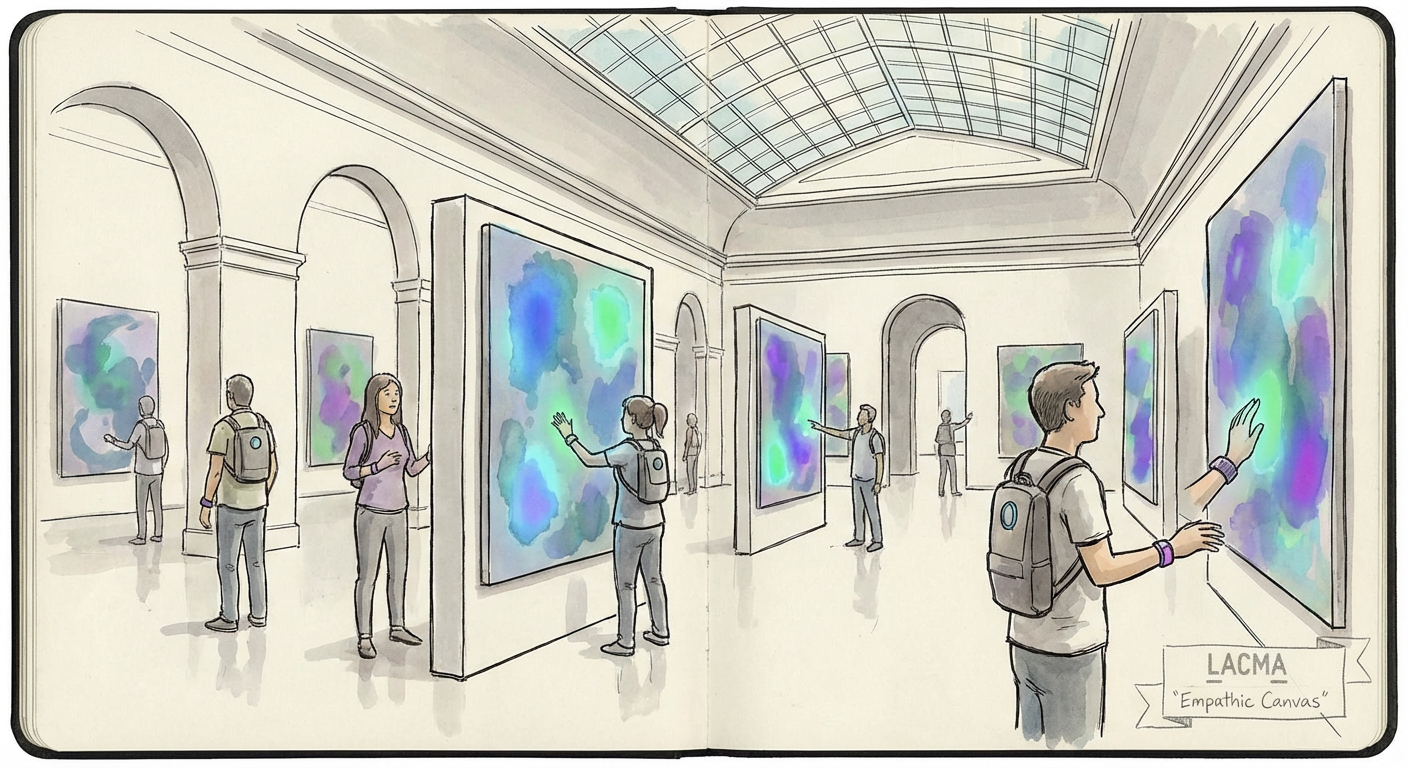
I’m standing three feet from Yuki Tanaka’s “Emotional Landscape #3,” watching azure blues melt into volcanic oranges as my pulse quickens. The painting reads me like a mood ring on steroids, its thermochromic pigments responding to biometric data streaming from sensors embedded in the gallery floor and ceiling. This isn’t some Silicon Valley fever dream. This is February 2026, and the Los Angeles County Museum of Art has just cracked the code on something the art world has been chasing since the Romantics first proclaimed that great art should move us.

The Museum Is Reading Your Mind: Inside LACMA's Biosensitive Art Revolution
The Museum Is Reading Your Mind: Inside LACMA’s Biosensitive Art Revolution

The LACMA Empathic Canvas Exhibition is a three-point-four-million-dollar gamble that traditional museums are failing their audiences. Twelve paintings embedded with thermochromic and electrochromic materials now shift and pulse in real-time response to visitors’ heart rates, skin conductance, and facial micro-expressions. It’s the kind of radical departure that would have sent Allan Kaprow into raptures and probably given Clement Greenberg an aneurysm.

But here’s what the critics missing the opening are failing to grasp: this isn’t a gimmick. It’s a complete reimagining of the relationship between artwork and audience that makes Marcel Duchamp’s urinal look quaint by comparison.

Illustration for The Museum Is Reading Your Mind: Inside LACMA's Biosensitive Art Revolution
Illustration for The Museum Is Reading Your Mind: Inside LACMA’s Biosensitive Art Revolution

The MIT Connection: Where Neuroscience Meets Brushstrokes

The technology behind these responsive canvases comes from MIT Media Lab Biometric Art Research, where computer scientists and cognitive researchers spent three years developing sensors sensitive enough to detect the micro-fluctuations in human emotional states. We’re talking about technology that can read the subtle electrical changes in your skin, track the barely perceptible shifts in your facial muscles, and translate that data into color algorithms faster than you can consciously process what you’re feeling.

The sensors themselves are invisible, integrated into the gallery’s architecture with the same attention to aesthetics that LACMA brings to its lighting design. Visitors walk through electromagnetic fields that monitor their biometric signatures without any wearable devices or intrusive procedures. The paintings receive this data and translate it through proprietary software that maps emotional responses to specific color palettes and intensities.

What’s remarkable is how the technology preserves artistic intentionality while expanding it. Tanaka and the other featured artists spent months programming their pieces’ response patterns, creating what amounts to emotional sheet music that plays differently for every visitor. It’s collaborative art in the most literal sense, with each viewing creating a unique performance that will never be repeated exactly.

The Engagement Revolution: Why Eight Minutes Matters

The numbers tell a story that should terrify and exhilarate every museum director in the world. Visitor surveys reveal that ninety-four percent of people engage meaningfully with the Empathic Canvas pieces, compared to twenty-three percent for traditional static exhibitions. More telling, average viewing time has exploded from forty-three seconds to eight-point-seven minutes per piece.

But duration isn’t the real victory here. It’s the quality of attention these works demand. I watched a teenager spend twenty minutes with Tanaka’s piece, unconsciously modulating her breathing as she discovered how her emotional state affects the color temperature. She’s not just looking at art. She’s having a conversation with it, learning about her own emotional responses through the painting’s feedback loop.

This is what happens when museums stop treating visitors as passive consumers and start recognizing them as active participants in the aesthetic experience. The Empathic Canvas pieces don’t just hang on the wall waiting to be appreciated. They perform, they respond, they create moments of genuine surprise that force viewers to confront their own emotional reactions in real-time.

Tanaka’s Masterpiece: Forty-Seven Thousand Shades of Human

Tanaka’s “Emotional Landscape #3” has become the exhibition’s breakout star, recording forty-seven thousand distinct color variations during its first week on display. Each configuration is a unique emotional fingerprint, a visual record of how different visitors process the same visual stimuli. The piece basically creates a living archive of human emotional response, more comprehensive than any psychological study.

What fascinates me is how Tanaka has managed to maintain artistic coherence while embracing infinite variability. The painting’s base composition remains constant, but its emotional topography shifts like weather patterns across a landscape. Sometimes it pulses with nervous energy, electric greens and sharp yellows crackling across the surface. Other times it settles into deep contemplative purples and blues that seem to slow time itself.

The work succeeds because Tanaka understands that technology should amplify artistic vision, not replace it. The biometric responses trigger changes within carefully orchestrated parameters that preserve the piece’s aesthetic identity while allowing for genuine surprise and discovery.

The Global Ripple Effect: Beyond LACMA’s Walls

Fifteen international museums have already licensed the technology, generating over eighteen million dollars in revenue for LACMA’s education programs. But the real impact extends far beyond financial returns. We’re watching the birth of an entirely new medium, one that could completely alter how we think about the relationship between art and audience.

The implications reach into questions that have plagued aesthetic theory for centuries. If a painting changes based on who’s looking at it, where does the artwork end and the viewer begin? Are we looking at twelve paintings in the Empathic Canvas exhibition, or thousands of unique collaborative performances? These aren’t just theoretical puzzles for graduate seminars. They’re practical questions that will shape how the next generation experiences and creates art.

Museums that ignore this shift do so at their own risk. The traditional white cube model, with its emphasis on contemplative distance and reverential silence, suddenly looks as outdated as a daguerreotype. The future belongs to institutions willing to transform their visitors from observers into participants, from consumers into collaborators.

Visit the exhibition yourself and tell me what colors your emotions paint. I guarantee you’ll never look at a static canvas the same way again.

Why Every Artist Lies About Their Influences (And What Their Sketchbooks Actually Reveal)

The Mythology Machine in Motion

I’m standing in Joanna Chen’s studio, watching her flip through a battered Moleskine filled with fragments that will never make it into her artist statement. There’s a crude sketch of a Diebenkorn painting she saw at SFMOMA in 2019, notes scribbled beside a photo of rust patterns on a Detroit warehouse, and what appears to be color swatches torn from a magazine ad for breakfast cereal. None of this appears in the pristine lineage she traces in gallery interviews, where she name-drops Agnes Martin and cites Japanese woodblock prints with the confidence of someone who’s never had to explain why Lucky Charms orange made it into her latest series.

This disconnect between stated influences and actual creative DNA isn’t dishonesty. It’s survival. The art world demands clean narratives, scholarly pedigrees, and influences that photograph well for Instagram posts. But real artistic lineage looks more like Chen’s sketchbook: messy, contradictory, and embarrassingly human. When artists claim direct descent from canonical masters, they’re usually editing out the comic books, pop songs, and random conversations that actually shaped their work.

The mythology machine kicks into overdrive during gallery talks, where artists perform elaborate genealogies that sound more like academic papers than honest accounts of creative development. Last month, I watched a painter explain his “deep engagement with Rothko’s spiritual abstractions” while his studio assistant quietly confirmed he’d never visited the Rothko Chapel but had spent hours analyzing the color gradients in Blade Runner 2049.

Following the Money Trail of Influence

Art historical influence operates like a stock market where certain names inflate your value while others tank it. Try listing manga as a primary influence in a contemporary art context and watch curators’ eyes glaze over, even if your visual language owes more to Naoki Urasawa than Willem de Kooning. The hierarchy isn’t about artistic merit but about institutional validation and market positioning. Museums buy stories as much as they buy artworks, and some influences simply don’t fit the narrative frameworks that justify six-figure acquisitions.

This creates a parallel economy of “acceptable” versus “actual” influences. I’ve interviewed sculptors who publicly cite Brâncuși while privately admitting their breakthrough came from studying how Pixar animators handle form and light. Electronic musicians trace their lineage to Stockhausen and Xenakis in press releases, then confess in off-the-record conversations that their compositional approach comes from years of playing Final Fantasy soundtracks on repeat.

The irony cuts deeper when you realize how many canonized artists were themselves drawing from “lowbrow” sources. Warhol’s entire career turned on commercial imagery that would have been dismissed as kitsch without his institutional framing. Basquiat synthesized street art, comic books, and pop culture into paintings that now sell for hundreds of millions. But their contemporary imitators feel pressure to cite high art precedents rather than acknowledging their actual cultural diet of TikTok videos, video game aesthetics, and streaming platform algorithms.

The Archaeological Method of Real Lineage

Authentic influence tracing requires archaeological patience, not art historical name-dropping. When I research an artist’s development, I ignore their official statements and focus on what they were consuming during formative periods. What books were on their nightstand? Which films did they rewatch obsessively? What music was playing in their studio during breakthrough moments? These details rarely make it into gallery wall texts, but they explain aesthetic choices better than any scholarly interpretation.

Take Kehinde Wiley’s portrait practice, which gets explained through classical painting traditions and postcolonial theory. But spend time examining his work closely and you’ll notice compositional elements that mirror fashion photography, hip-hop album covers, and even Instagram’s visual grammar. His genius lies in synthesizing these contemporary influences with historical portraiture conventions rather than rejecting them. The result feels both timeless and urgently present because it acknowledges the full spectrum of its cultural DNA.

This archaeological approach reveals influence as ongoing conversation rather than static inheritance. Artists don’t just receive tradition. They actively interpret, reject, and transform it based on their lived experience and contemporary context. The most vital work emerges when artists stop trying to prove their worthiness to dead masters and start responding to the cultural moment they actually inhabit.

Digital Breadcrumbs and Algorithmic Ancestry

Contemporary influence operates at unprecedented speed and scale, making traditional lineage tracing nearly impossible. Artists today develop visual languages through algorithmic feeds that deliver centuries of imagery in minutes, creating aesthetic hybrids that would have taken previous generations decades to encounter. A single Pinterest board might contain Byzantine mosaics, manga panels, nature photography, and runway fashion, all contributing to an artist’s evolving visual vocabulary.

This acceleration creates new forms of influence anxiety. When every image in history becomes instantly accessible, how do you establish authentic connection versus surface appropriation? I’ve watched emerging artists become paralyzed by the fear that their “original” ideas already exist somewhere in the infinite scroll of digital imagery. The solution isn’t avoiding digital culture but developing more sophisticated ways of understanding how influence actually works in networked environments.

The most interesting contemporary artists treat this information overload as raw material rather than obstacle. They understand that influence isn’t about avoiding repetition but about creating meaningful friction between disparate elements. When Ryan Trecartin makes video work, he’s not trying to cite Nam June Paik or Bill Viola. He’s responding to the specific ways digital culture has rewired human attention and communication patterns.

Beyond the Anxiety of Influence

The healthiest artistic practices I’ve observed treat influence as a metabolic process rather than intellectual debt. Artists consume culture the way plants process sunlight, transforming external inputs into something entirely new through their unique creative chemistry. This perspective removes the moral weight from influence relationships and focuses attention on transformation rather than attribution.

Visiting studios and talking with artists in unguarded moments reveals how this metabolism actually functions. Influences combine and recombine in unexpected ways: a conversation with a plumber influences a painter’s approach to color mixing, a documentary about urban planning reshapes a musician’s understanding of rhythm and space, a child’s drawing method unlocks new possibilities in a sculptor’s practice. These connections resist academic categorization but produce the most vital and surprising artistic developments.

What if we stopped asking artists to justify their influences and started asking how they transform them? What if galleries presented work alongside the full spectrum of cultural inputs that shaped it, not just the prestigious precedents? The next time you encounter an artwork that moves you, resist the urge to place it in familiar categories. Instead, let yourself wonder what strange combination of influences and accidents brought it into being.

When Radiohead’s Jonny Greenwood Writes Film Scores: Why Cross-Pollination Creates the Most Interesting Art

The Moment Everything Clicked

Picture this: you’re sitting in a theater watching “There Will Be Blood,” and suddenly the strings start shrieking in a way that makes your spine tingle. It’s not quite classical, not quite rock, but something entirely new. That’s Jonny Greenwood from Radiohead wielding an orchestra like his guitar, creating something that neither pure film composers nor pure rock musicians could have conceived alone.

This kind of cross-pollination isn’t just trendy collaboration for collaboration’s sake. It’s artists stepping outside their comfort zones and discovering that their “foreign” perspective becomes their greatest strength. When Greenwood approaches orchestral arrangement with a guitarist’s understanding of texture and dissonance, he creates film scores that sound like nothing else in cinema.

Why Creative Collision Works Better Than Creative Consensus

The best collaborative work happens when artists don’t try to find common ground but instead embrace their differences. Take the partnership between filmmaker Lynne Ramsay and artist Peter Doig. When Ramsay was developing “You Were Never Really Here,” she didn’t ask Doig to make paintings that looked cinematic. Instead, she absorbed his approach to fractured memory and emotional landscape, translating Doig’s painterly logic into film editing rhythms.

This creates what I call “productive friction.” When choreographer Pina Bausch worked with filmmaker Wim Wenders on “Pina,” neither artist compromised their vision. Wenders didn’t make dance look like traditional cinema, and Bausch didn’t choreograph for the camera. Instead, they found ways to make dance and film enhance each other’s essential qualities. The result feels both completely cinematic and completely choreographic.

The magic happens because each artist brings their medium’s unique problem-solving methods to the table. A musician thinks in time and rhythm. A visual artist thinks in space and color. A writer thinks in narrative and voice. When these different cognitive approaches collide, they generate solutions that no single discipline could reach alone.

The Underground Networks You Should Know About

While mainstream media loves to spotlight celebrity collaborations, the most innovative cross-medium work often happens in smaller, more experimental circles. In Detroit, visual artist Kara Walker has been working with techno producer Carl Craig on installations that use electronic music to activate her silhouettes in completely new ways. The shadows literally dance to Craig’s beats, creating a conversation between historical trauma and futuristic sound.

Similarly, in Los Angeles, performance artist Ron Athey regularly collaborates with noise musicians like Pharmakon to create events that exist somewhere between concert, art performance, and ritual. These aren’t just musicians playing while someone performs. They’re creating hybrid art forms that couldn’t exist without both disciplines fully committed to the collaboration.

These underground networks matter because they’re where the real experimentation happens, free from commercial pressures to make sense to existing audiences. They’re laboratories for new forms that eventually influence mainstream culture in ways we don’t always recognize.

The Technical Craft of Translation

Successful cross-medium collaboration requires more than good intentions. It demands artists who understand their own craft deeply enough to translate its essential elements into another language. When filmmaker Apichatpong Weerasethakul collaborates with installation artists, he doesn’t just project his films in galleries. He deconstructs cinema’s relationship with time and space, creating video installations that make viewers experience narrative the way his films make you experience dreams.

Consider how graphic novelist Adrian Tomine approaches his collaborations with musicians. When he creates album artwork, he doesn’t just illustrate the music. He finds visual equivalents for the music’s emotional architecture. His cover for Yo La Tengo captures the band’s gentle melancholy through spare line work and muted colors that echo their sonic restraint.

The best collaborative artists develop what I think of as “bilingual fluency.” They can speak their native artistic language while also understanding the grammar and syntax of their collaborator’s medium. This isn’t about becoming an expert in everything, but about developing enough literacy in other forms to have meaningful conversations across disciplines.

Breaking Down the Walls We Build

The art world’s tendency to categorize and separate mediums often prevents the kind of boundary-crossing that creates genuinely new work. When we insist that music is music and visual art is visual art, we miss opportunities for forms that could be both and neither. The most exciting contemporary artists are those who refuse these artificial boundaries.

Look at artist Laurie Anderson, who has spent decades moving fluidly between music, performance, visual art, and technology. Her work succeeds because she never treats these as separate activities that need to be combined. Instead, she approaches each project with whatever combination of tools and techniques will best serve her ideas. Sometimes that’s a violin, sometimes it’s a computer program, often it’s both plus things that don’t have names yet.

This kind of medium fluidity requires a fundamental shift in how we think about artistic identity. Instead of being “a painter who sometimes works with musicians,” successful collaborative artists think of themselves as people who use whatever tools best serve their vision, whether those tools happen to be paintbrushes, synthesizers, or movement.

What This Means for How We Experience Art

Cross-medium collaboration doesn’t just change how art gets made. It changes how we experience and understand it. When you encounter work that exists between traditional categories, you have to develop new ways of paying attention. You might find yourself listening to a painting or watching music in ways that expand your perceptual capabilities.

This expansion matters because it prepares us for a cultural moment where the most vital art increasingly refuses to stay in its lane. As technology continues to blur the boundaries between different forms of expression, artists who can work fluidly across mediums aren’t just making interesting art. They’re developing the creative languages we’ll need to navigate an increasingly hybrid cultural landscape.

The next time you encounter art that doesn’t fit neatly into familiar categories, resist the urge to figure out what it “really” is. Instead, let yourself experience what happens when different artistic traditions meet and create something entirely new. That’s where the future of creative expression is being written, one collaboration at a time.

The Dealer’s Last Stand: How Pace Gallery’s Chelsea Exodus Signals the End of an Era

When the Walls Come Down

David Kordansky stood in his now-empty Culver City warehouse last month, watching movers wrap a Kelley Walker piece in bubble wrap. The gallery had just announced its move to a smaller space in West Hollywood, citing “changing market conditions” — art world speak for the slow-motion collapse of the mid-tier gallery ecosystem. Kordansky’s retreat mirrors a broader unraveling that began with Pace Gallery’s shocking departure from its 25th Street flagship in 2022, a move that sent shockwaves through Chelsea’s art establishment.

The geography of contemporary art has always been political, but today’s gallery migrations reveal something more profound than real estate pressures. We’re watching the death of the post-war gallery model that transformed unknown artists into auction house darlings through careful curation and market positioning. The old guard’s retreat signals not just economic uncertainty, but the fundamental breakdown of the cultural gatekeeping apparatus that has defined art world hierarchy for decades.

The Vanishing Middle

Between 2020 and 2023, over forty galleries closed their doors permanently in New York alone. These weren’t fly-by-night operations but established players like Andrew Kreps Gallery, which shuttered after two decades of championing experimental work. The casualties span generations: from veterans like Anton Kern, who built careers for artists like Kara Walker, to younger spaces like Ramiken Crucible, whose irreverent programming challenged blue-chip orthodoxy.

The survivors tell an even starker story. Gagosian continues expanding with new outposts in Beverly Hills and Athens, while Hauser & Wirth opens sprawling complexes in Somerset and Menorca. The art world is splitting into a handful of mega-galleries operating like multinational corporations and scrappy project spaces running on fumes and idealism. The middle tier, galleries that could nurture artists over decades while maintaining editorial independence, is vanishing.

This consolidation mirrors broader cultural industries, but the stakes feel different in art. When independent bookstores close, readers can still find diverse voices through online platforms. When mid-tier galleries disappear, entire aesthetic movements risk extinction. The experimental practices that galleries like Reena Spaulings championed (collaborative authorship, institutional critique, anti-market strategies) become increasingly difficult to sustain without institutional support.

The Fair Circuit’s Stranglehold

Art Basel’s recent expansion into Seoul reveals the fair circuit’s global ambitions, but also its homogenizing influence on gallery programming. Dealers now structure their exhibition calendars around fair deadlines, creating an assembly-line approach to art production that prioritizes sellable objects over challenging concepts. The fair model rewards galleries that can deliver consistent product rather than those pushing aesthetic boundaries.

Consider the trajectory of Clearing, the Brussels-based gallery that opened a New York space in 2016. Initially celebrated for introducing European conceptual artists to American audiences, Clearing gradually shifted toward more commercially viable paintings and sculptures. The gallery’s Instagram feed tells the story: early posts featured dense theoretical texts and process documentation, while recent content focuses on polished object shots optimized for social media engagement.

The fair circuit’s influence extends beyond sales strategy to curatorial vision itself. Galleries increasingly program exhibitions that function as extended advertisements for upcoming fair presentations. The traditional model of the gallery as laboratory, a space for artistic risk-taking and long-term relationship building, gives way to showroom logic where immediate visual impact trumps conceptual depth.

Digital Disruption and Platform Politics

Instagram’s algorithm changes in 2022 devastated smaller galleries’ ability to reach new audiences organically, forcing many to purchase advertising or partner with influencer-collectors for visibility. Meanwhile, platforms like Artsy and Artnet have created parallel economies where price transparency undermines galleries’ traditional role as market makers. Young collectors increasingly bypass galleries entirely, purchasing directly from artists through social media or online marketplaces.

The rise of digital-native spaces like Transfer Gallery and Panther Modern represents an attempt to adapt to platform-based culture, but their success remains limited. Transfer’s virtual reality exhibitions generated significant press coverage but struggled to translate online engagement into sustained patronage. The platform economy rewards scale and viral content over the intimate relationships that historically sustained gallery ecosystems.

More troubling is the emergence of algorithmic curation through AI-powered recommendation systems. Services like Magnus use machine learning to predict collector preferences, potentially creating feedback loops that homogenize artistic production. When purchase decisions are mediated by algorithms trained on existing sales data, the risk of aesthetic stagnation increases exponentially.

The Resistance Underground

Yet reports of the gallery system’s death may be premature. In Ridgewood, Queens, a collective of artists has transformed abandoned warehouses into exhibition spaces that operate outside traditional commercial structures. Venus Over Manhattan continues championing forgotten modernist masters alongside contemporary provocateurs, proving that scholarly rigor and commercial success aren’t mutually exclusive. In Los Angeles, galleries like Human Resources maintain fierce independence while building international reputations through uncompromising programming.

These survivors share common strategies: diversified revenue streams that don’t depend solely on sales, strong relationships with institutional curators, and commitment to artists’ long-term development rather than quick market returns. They’ve also embraced new models of collectorship, working with younger patrons who prioritize cultural engagement over investment potential.

The most promising developments may be happening at the margins. Artist-run spaces like Nowadays in Ridgewood operate more like community centers than commercial galleries, hosting everything from sound performances to political organizing meetings. These hybrid models suggest possibilities for cultural production that transcends market logic entirely.

The gallery world’s current upheaval offers an opportunity to question assumptions about cultural value that have gone unquestioned for decades. As the old hierarchies crumble, new forms of artistic community and support are emerging. Whether these alternatives can sustain the complex ecosystems necessary for ambitious art-making remains to be seen, but the conversation itself represents a crucial reconsideration of how culture gets made and who gets to participate in its creation.